Why Beat 'em Ups?
Among all arcade genres, the beat 'em up is the one that best captures the true spirit of the arcade.
Fighting games require a worthy opponent. Shooters require pixel-perfect precision. But a beat 'em up only needs two things: you and a coin. From there, you can fight your way through the streets of a crime-ridden city to the final boss solo, or grab a friend—standing shoulder-to-shoulder, shouting "Left! Left! Left!" at the screen.
From the moment Final Fight established the genre's framework in 1989 until the arcade market began to shrink around 2000, these eleven years were the golden age of the beat 'em up. Capcom, Konami, Sega, Irem, Technōs—each contributed their own masterpieces. This article selects the 15 most essential beat 'em ups worth playing today.
Selection Criteria & Disclaimer
Selection criteria:
- Game Feel: Frame data of attacks, precision of hitboxes, and the feedback of visual and auditory effects.
- Enemy Design: Variety of grunts, uniqueness of elite enemies, and tactical depth of bosses.
- Pacing: Scene transitions, enemy wave arrangements, and the design of mid-stage events and climaxes.
- Co-op Experience: Whether playing together creates a "1+1 > 2" level of fun (the soul of the arcade beat 'em up).
Not being on this list doesn't mean a game isn't good. Titles like Silent Dragon, Undercover Cops, and Battle Circuit are excellent, just slightly edged out by those selected. Additionally, this list is limited to traditional beat 'em ups (hand-to-hand/melee combat) and excludes Run & Gun shooters (like Metal Slug or Contra), which belong to a different category.
15 Legendary Beat 'em Up Classics
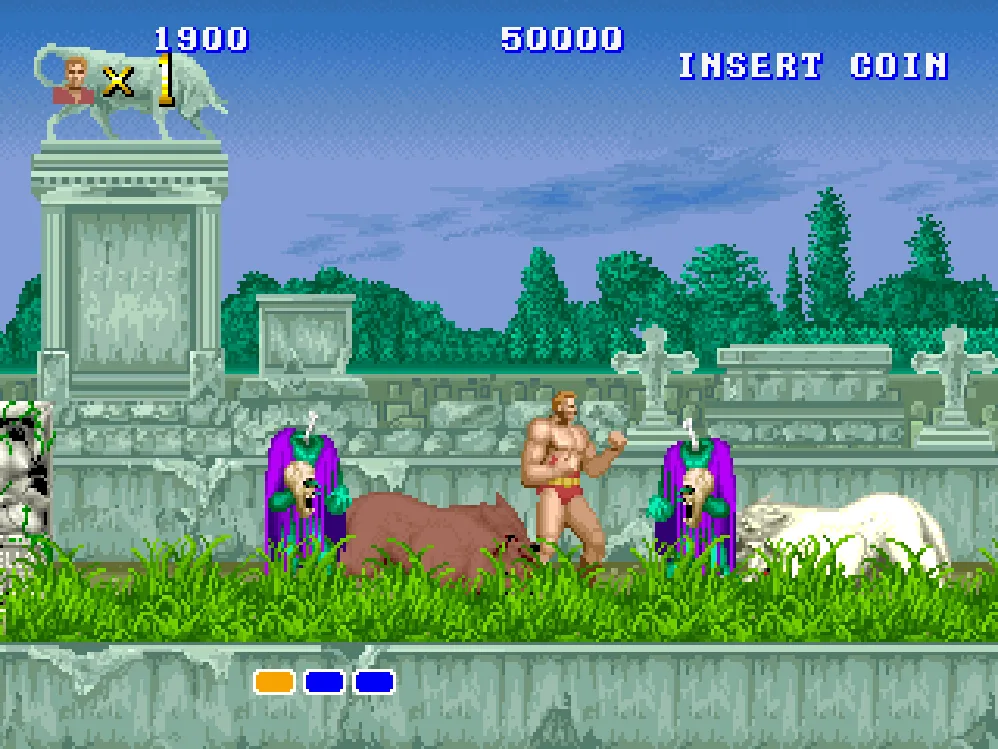
#15: Altered Beast (1988, Sega)
Why it made the list: Historical significance as a prototype.
Looking back today, the systems and feel of Altered Beast are quite rough: imprecise hitboxes, sluggish movement, and while the transformation animations are cool, the gameplay is limited. However, in 1988, it was one of the first arcade games to run on 16-bit hardware (Sega System 16) and one of the first to introduce a "transformation" mechanic to the genre. The protagonist collects power-ups to turn into a werewolf, dragon, bear, or tiger—a design that left countless players in awe back in 1988.
In terms of pure gameplay, we don't recommend it as a starting point. But if you want to understand where the beat 'em up came from, Altered Beast is a mandatory history lesson.
#14: Renegade (1986, Technōs Japan)
Why it made the list: The actual origin of the beat 'em up.
Before Final Fight, there was Renegade. Produced in 1986 by Technōs Japan (later famous for Double Dragon and the Kunio-kun series), this game is arguably the first arcade title to feature the core characteristics of the genre: fighting multiple enemies with your bare hands in a side-scrolling environment. It lacks a dedicated jump button (only punch and kick) and fancy combo systems, but it established the core rules: clearing space with back attacks when surrounded, grabbing enemies for throws, and using stage boundaries to manage enemy numbers.
#13: Streets of Rage 2 (1992, Sega)
Why it made the list: Sega's strongest counter-attack against Capcom.
The Streets of Rage series was Sega's answer to Final Fight, and the second entry is the pinnacle of the series. The four characters (Max, Blaze, Axel, Skate) have completely different playstyles; Max's power-throwing style and Skate's speed-pressure style represent two extreme design directions for the genre. Yuzo Koshiro's electronic soundtrack is one of the greatest in gaming history—even 30 years later, club DJs still sample its basslines.
Note: The Streets of Rage series was exclusive to Sega Genesis/Mega Drive and has no native arcade version. However, thanks to emulator compatibility, you can play them right here on our site.
#12: Undercover Cops (1992, Irem)
Why it made the list: A severely underrated cult classic.
Irem's title didn't get much attention upon release—it was squeezed between the tail end of the Final Fight craze and the total dominance of the CPS1. But Undercover Cops features some of the best stage art and post-apocalyptic world-building of that era, with a soundtrack that maintains Irem's consistently high standards. The differentiation between the three playable characters is excellent: Zan's melee throws, Matt's balanced style, and Rosa's agile pressure.
#11: Growl (1990, Taito)
Why it made the list: Unique animal protection theme and diverse weapon system.
Taito was an underrated player in the beat 'em up market. Growl features an animal protection theme—you play as a forest ranger fighting poachers—which is extremely rare in arcade games. The game offers a staggering variety of weapons (including rocket launchers, grenades, whips, daggers, etc.), and enemies often carry weapons too, leading to intense disarming combat. The chaotic scene of four-player co-op was a spectacle in 1990.
#10: Shadow Force (1993, Technōs Japan)
Why it made the list: Unique "possession" mechanic.
Technōs' last major work in the beat 'em up genre. The core mechanic is "possession": you can possess any enemy and immediately use their full move set. Possess a knife-wielding grunt → you use knife attacks; possess a boss → you temporarily gain the boss's abilities. This system turns every fight into a strategic decision of "who should I possess?" Facing financial difficulties in the mid-90s, Shadow Force never received the marketing it deserved—it remains one of the biggest "what ifs" in beat 'em up history.
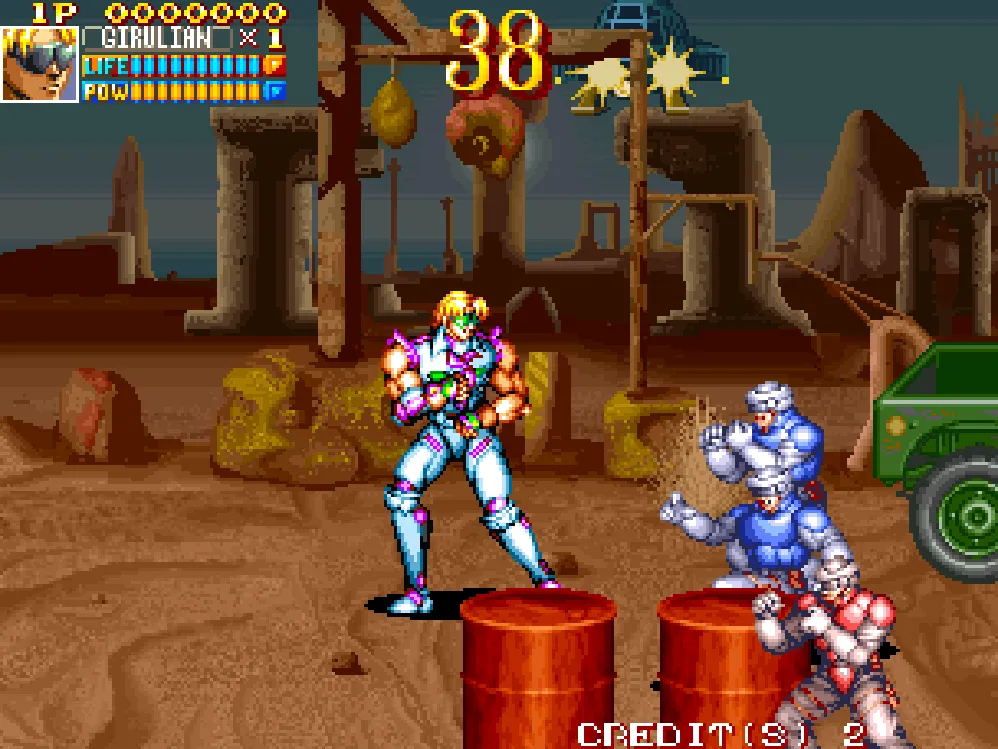
#9: Guardians / Denjin Makai II (1995, Winkysoft / Banpresto)
Why it made the list: A forgotten Neo Geo beat 'em up masterpiece.
There weren't many beat 'em ups on the Neo Geo (SNK focused more on fighting games), but Guardians is a stunning exception. With 8 playable characters, dozens of special move commands for each (using a fighting game-style input system), and branching paths, its system depth far exceeds any other beat 'em up of the time. Unfortunately, Winkysoft went bankrupt shortly after the game's release, and the physical arcade boards are extremely rare—most players only discovered it through emulators.
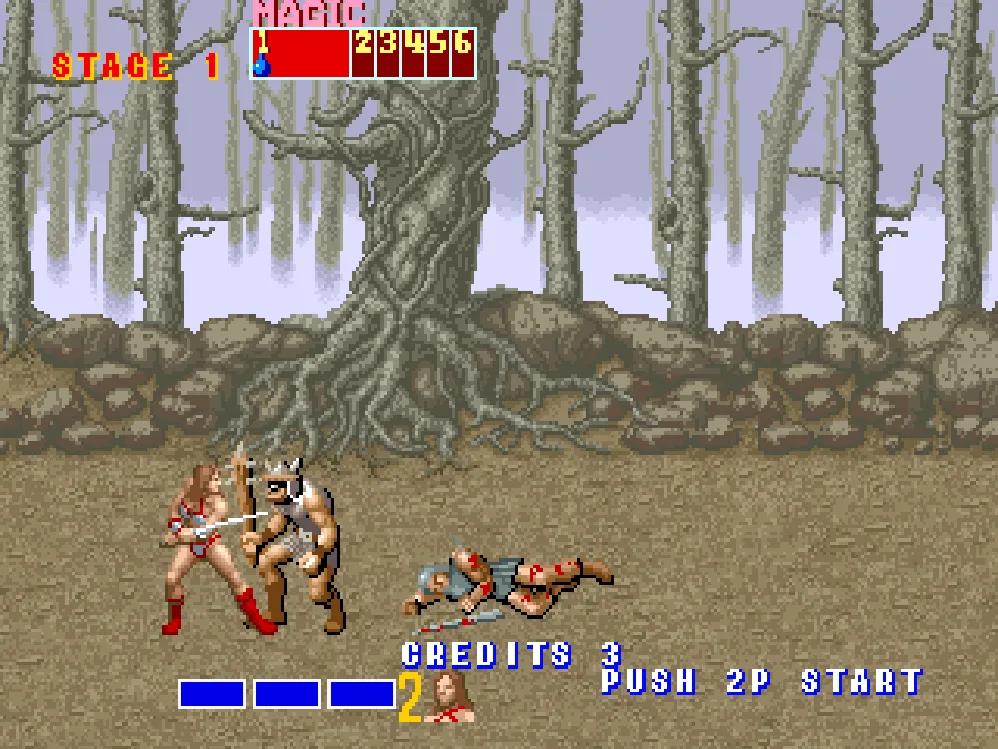
#8: Golden Axe (1989, Sega)
Why it made the list: A groundbreaking combination of medieval hack-and-slash and mount systems.
A flagship title for the Sega System 16 board. Fighting skeletons and giant bosses with swords, axes, and magic in a medieval fantasy world was a breath of fresh air in 1989 arcades. The mount system is Golden Axe's most iconic design: you can ride dragons or monsters, each with their own independent attack patterns. However, mounts also increase the player's hitbox, making them easier to hit—it's not a pure "upgrade," but a tactical choice that requires trade-offs. This "power-up with a cost" design remains rare even in today's games.
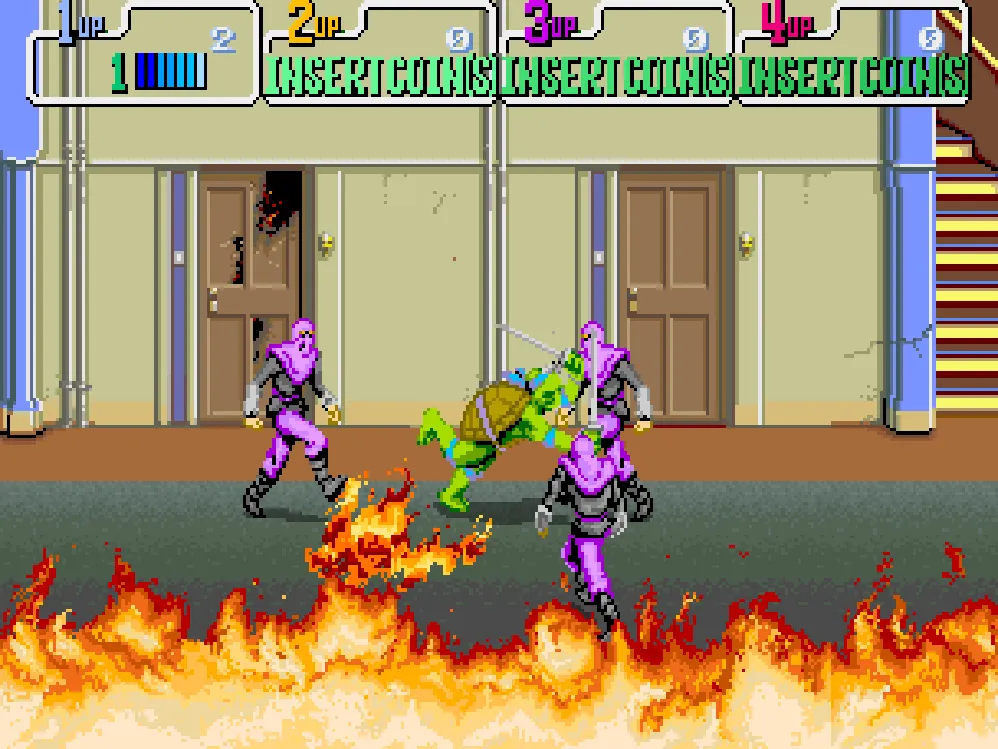
#7: Teenage Mutant Ninja Turtles (1989, Konami)
Why it made the list: The textbook example of a 4-player licensed game.
Konami produced a slew of high-quality licensed games in the late 80s and early 90s, and TMNT was the most successful. The four turtles have completely different weapons (twin katanas, sai, bo staff, nunchucks) and attack range/speed balances. When four players cooperate, the screen becomes packed with turtles and Foot Soldiers—a scene that can only be described as "chaotic and joyful." Konami's art team perfectly captured the visual style of the 80s cartoon, a massive achievement given the technical limitations of the time.
#6: Warriors of Fate (1992, Capcom)
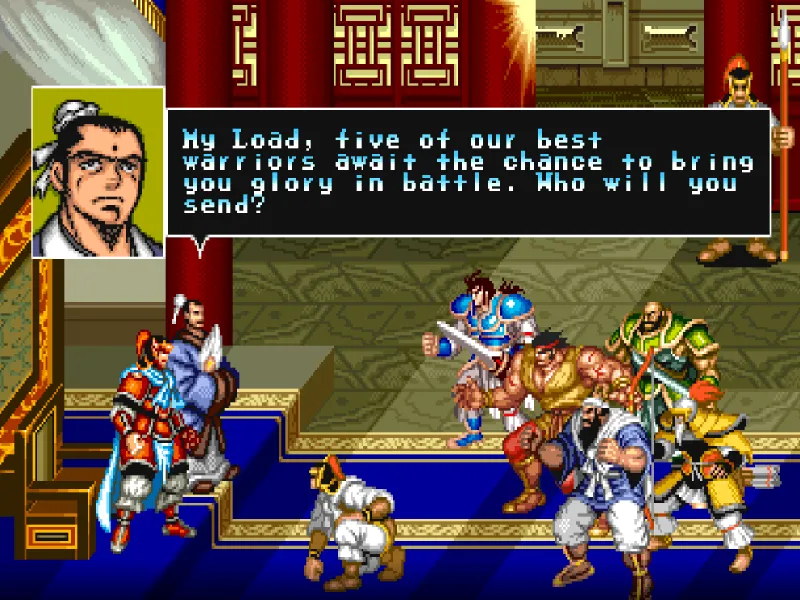
Why it made the list: One of the most beloved arcade games for Chinese players.
This isn't a game about historical accuracy—it's a game about "five legendary generals riding horses and cutting down hundreds of Yellow Turban rebels with giant glaives." Five characters are playable (Guan Yu, Zhang Fei, Zhao Yun, Huang Zhong, Wei Yan), each with unique weapons, attack ranges, and special moves. The mounted combat system significantly enhances the feeling of the battlefield. In 90s Chinese arcades, the popularity of Warriors of Fate was likely on par with The King of Fighters '97—the natural affinity for the Three Kingdoms theme combined with excellent gameplay created an unparalleled attraction.
#5: Captain Commando (1991, Capcom)
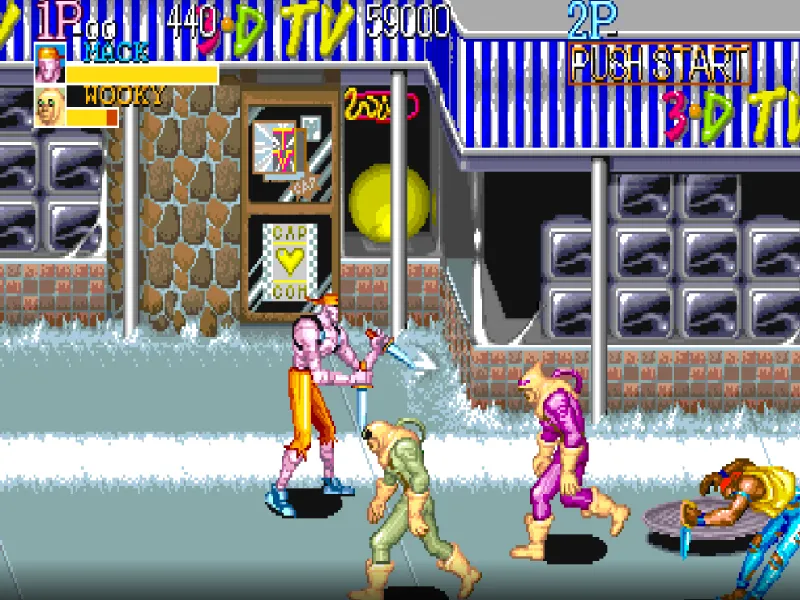
Why it made the list: The definitive 4-player sci-fi beat 'em up with unique character systems.
Four-player co-op is the signature feature of Captain Commando, but its true design highlight is the support system for each character: Captain's flamethrower and electric punch, Sho's (ninja) smoke bombs and clones, Jennety's (mummy) poison gas and spinning attacks, and Baby Head's mech suit—the four characters play like four different games. This "same game, different experience" design was a luxury in 1991.
#4: The Punisher (1993, Capcom)
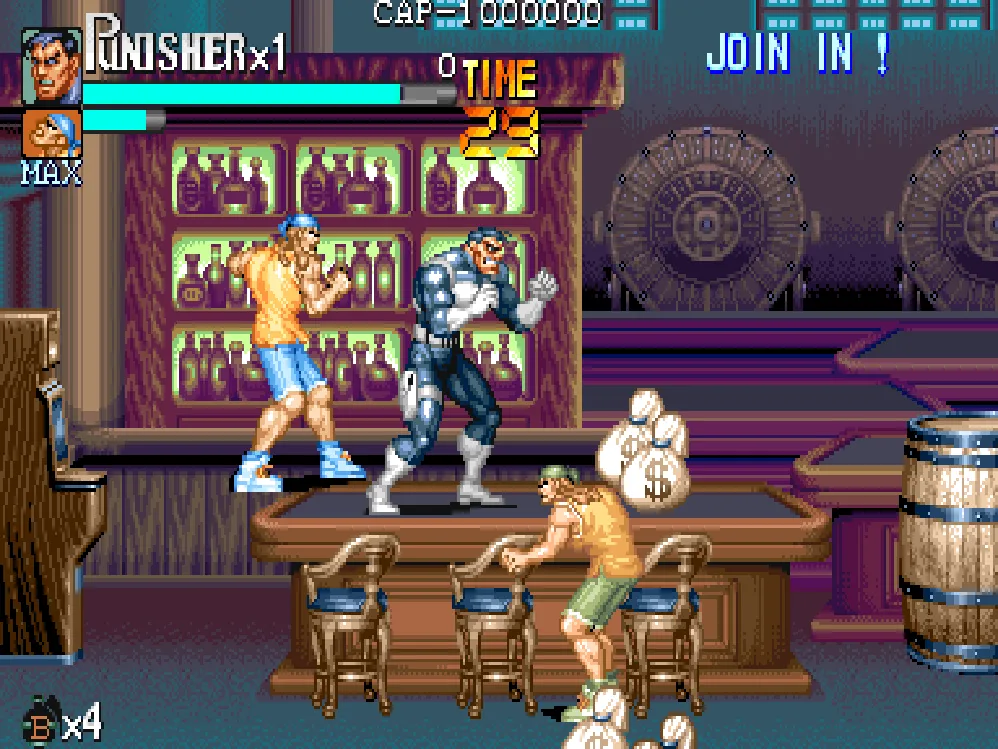
Why it made the list: The perfect fusion of firearms and melee combat.
Capcom's final masterpiece on the CPS1 platform and their most ambitious licensed game. Nick Fury is included as an exclusive 2P character—meaning the experience for two players is completely different. The Punisher's throw system is one of the most advanced in the genre: you can grab an enemy → punch them repeatedly → choose a direction to throw them → the thrown enemy will knock down others in their path. Combined with the range control of pistols and submachine guns, the tactical depth far exceeds contemporary titles.
#3: Streets of Rage 4 (2020, Dotemu / Lizardcube / Guard Crush Games)
Why it made the list: Proof that beat 'em ups can still shine in the 2020s.
Including this in a classic arcade list might be controversial—it's a 2020 console/PC game. But the significance of Streets of Rage 4 in carrying the torch of the arcade beat 'em up is too important: it not only retains the classic 2D hand-drawn art (handled by Lizardcube, with visuals so beautiful every frame could be a wallpaper), but also reconstructs the combo system within a modern design framework (adding aerial juggles, wall bounces, and OTG ground attacks). It proves that the beat 'em up formula isn't just for "nostalgia"—this core gameplay still has powerful vitality today.
#2: Cadillacs and Dinosaurs (1993, Capcom)
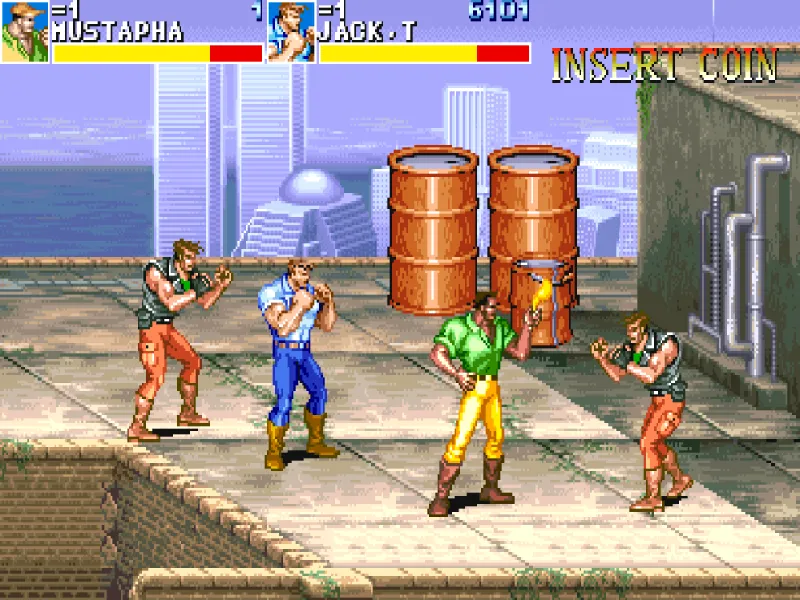
Why it made the list: The perfect balance in beat 'em up design.
Between system depth (mastery) and barrier to entry (accessibility), Cadillacs and Dinosaurs achieves the highest balance in the entire genre. Anyone can pull off satisfying combos in the first stage, but clearing all eight stages on one coin requires hundreds of hours of practice. Dinosaurs roam freely as neutral creatures in the stages, attacking both players and enemies indiscriminately—luring enemies toward dinosaurs to let them clear the screen for you is a common crowd-control technique used by experts.
#1: Final Fight (1989, Capcom)
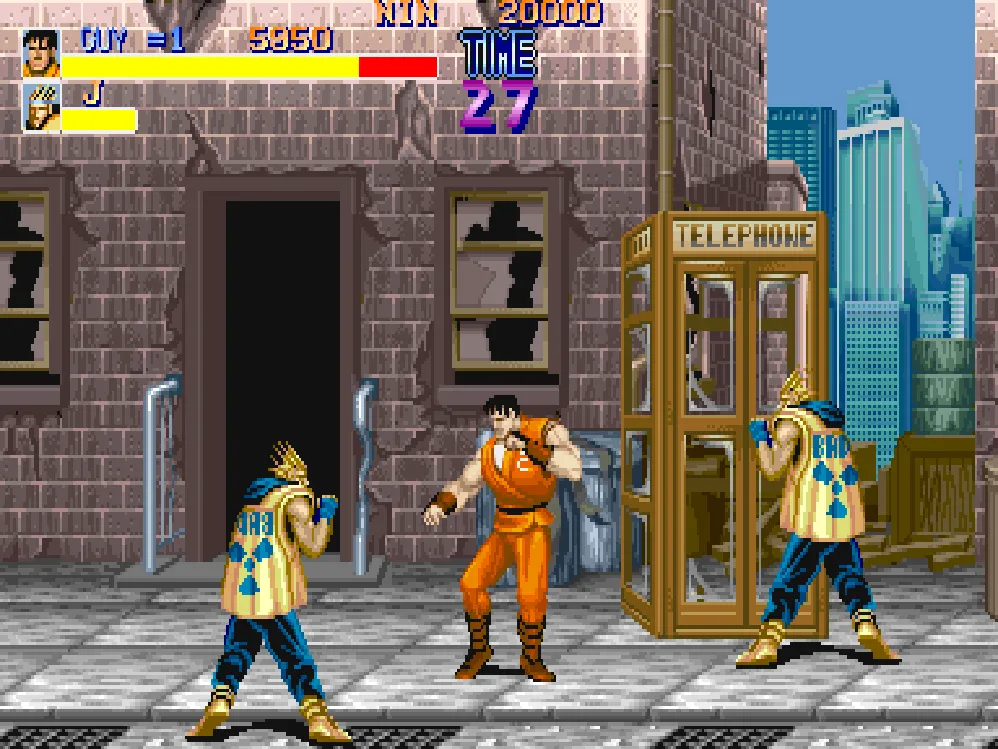
Why it made the list: Not because it's the most fun, but because it defined everything.
Putting Final Fight at number one isn't because it's the "most fun" (in terms of pure gameplay, Cadillacs and Dinosaurs and The Punisher feel better), but because it is the genetic source of 99% of all beat 'em ups. The attribute distribution of the three characters, the throw system, environmental destruction, health-draining special moves, boss design—almost every design element you see in any beat 'em up today can be traced back to Final Fight.
It's also at number one because it's an "honest" game. There are no systems to help you cover up mistakes—no dodge rolls, no blocks, no infinite combos. You only have a directional pad, an attack button, and a jump button. If you die, you die; if you want to continue, you insert a coin. This minimalist control scheme requires players to rely entirely on positioning and judgment to survive—and that is the deepest joy of the beat 'em up genre.
Comparison Table
| Rank | Game | Year | Developer | Players | Best Experience |
|---|---|---|---|---|---|
| 1 | Final Fight | 1989 | Capcom | 2P | Solo challenge + Understanding origins |
| 2 | Cadillacs and Dinosaurs | 1993 | Capcom | 3P | Co-op + One-coin clear challenge |
| 3 | Streets of Rage 4 | 2020 | Dotemu | 4P | Co-op + High score chasing |
| 4 | The Punisher | 1993 | Capcom | 2P | Co-op (2P experience is unique) |
| 5 | Captain Commando | 1991 | Capcom | 4P | Four-player chaos |
| 6 | Warriors of Fate | 1992 | Capcom | 3P | Co-op + Mounted combat |
| 7 | TMNT | 1989 | Konami | 4P | Four-player co-op + Childhood nostalgia |
| 8 | Golden Axe | 1989 | Sega | 2P | Solo experience + Mount system |
| 9 | Guardians | 1995 | Winkysoft | 2P | Solo system mastery |
| 10 | Shadow Force | 1993 | Technōs | 2P | Possession system experience |
| 11 | Growl | 1990 | Taito | 4P | Four-player chaos + Weapon variety |
| 12 | Undercover Cops | 1992 | Irem | 2P | Cult classic collection |
| 13 | Streets of Rage II | 1992 | Sega | 2P | Co-op + Soundtrack appreciation |
| 14 | Renegade | 1986 | Technōs | 1P | Archaeological experience |
| 15 | Altered Beast | 1988 | Sega | 2P | Historical archaeology |
Recommended Play-through Path
Don't start with #1. We recommend diving in gradually via this path:
- Beginner (2-3 hours): Cadillacs and Dinosaurs → The Punisher. These have the best feel, satisfying combos, and are beginner-friendly.
- Intermediate (3-5 hours): Captain Commando → Warriors of Fate → TMNT. Experience the joy of multiplayer co-op and understand the tactical differences between characters.
- Advanced (5-10 hours): Final Fight → Guardians → Streets of Rage 4. Understand the evolution of the beat 'em up from 1989 to 2020.
- Collection (Anytime): Golden Axe → Shadow Force → Undercover Cops → Renegade → Altered Beast. Experience the various unique gems of the genre.
The End and Continuation of an Era
Beat 'em ups fell into a long silence after 2000. 3D action games (Devil May Cry, God of War, Ninja Gaiden) inherited the "one-versus-many" soul of the beat 'em up, but fully embraced the third-person 3D perspective in their presentation. Pure 2D beat 'em ups almost disappeared—until the indie community rediscovered the genre in the 2010s.
Today, modern titles like Streets of Rage 4, TMNT: Shredder's Revenge, Fight'N Rage, and River City Girls prove one thing: the core joy of the beat 'em up—that experience of huddling in front of a screen with friends, coordinating your moves, and shouting "Hit him! Hit him!"—has not gone out of style. It just changed mediums. From arcade cabinets to consoles, and from consoles to browsers, the soul of the beat 'em up remains the same.
About missing games: Of the 15 games recommended in this article, the Streets of Rage series (II, 4) are console exclusives, and Renegade, Undercover Cops, Growl, and Shadow Force are not currently in our site's library. The other 9 classic beat 'em ups can be played for free directly in your browser by clicking the game screenshots or titles.