I. Game Background
1.1 Setting
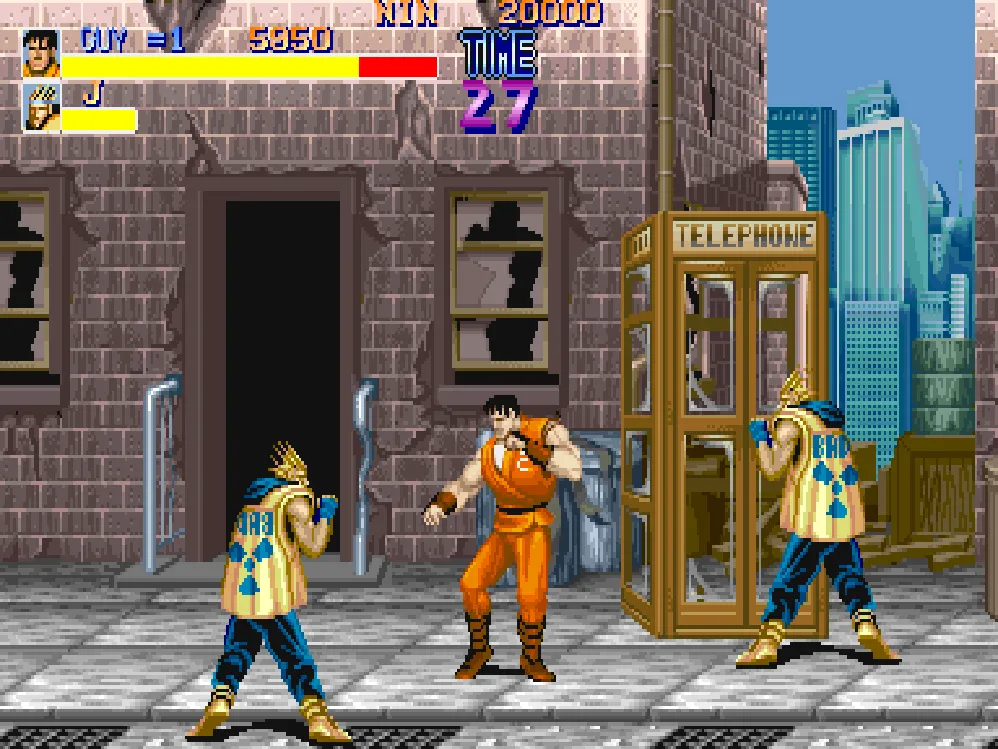
Final Fight is set in the near-future Metro City. Once a thriving industrial hub, the city has become a hotbed of violence since the rise of the "Mad Gear" gang. Mad Gear controls the streets, kidnaps citizens, and extorts businesses—and the city government seems unable or unwilling to intervene. Mike Haggar, a former professional wrestler turned mayor, is determined to clean up the city with an iron fist. But Mad Gear strikes first—they kidnap Haggar's daughter, Jessica, to blackmail him into dropping his anti-crime campaign.
Haggar refuses to compromise. He teams up with two allies—Jessica's boyfriend and street fighting expert Cody Travers, and the Bushin-ryu ninja Guy—to fight their way through the grimiest and most dangerous districts of Metro City, storming the Mad Gear headquarters to rescue Jessica from the gang leader, Belger.
1.2 Development History
Final Fight was released by Capcom in 1989 on the CPS1 arcade hardware. The game has a famous origin story: it was originally planned as a sequel to Street Fighter. When Capcom decided to pivot the Street Fighter II project into a competitive fighting game, this side-scrolling action project was rebranded as Final Fight. This is why Haggar's moveset is so similar to Zangief's—they share the same design DNA.
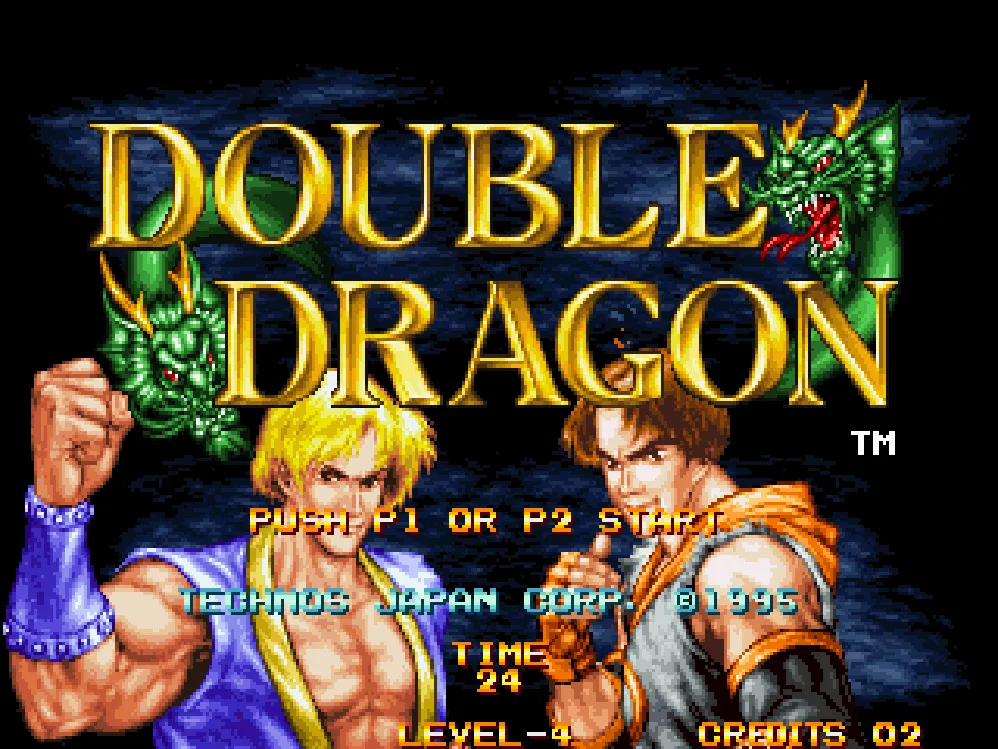
Produced by Yoshiki Okamoto, the game cemented Capcom's dominance in the 1990s beat 'em up genre. It drew aesthetic inspiration from the 1984 film Streets of Fire—neon-lit streets, biker gangs, and rock soundtracks—and built upon the side-scrolling framework established by Technos' Double Dragon. The original design document spanned 85 pages, covering every corner of Metro City and the costume design for every enemy.
Over 30,000 arcade units were sold worldwide. The SNES version famously cut Guy (who was added back in later versions), the industrial stage, and the female enemy "Poison" due to Nintendo's capacity and content censorship requirements. Poison later became one of the most famous LGBTQ+ characters in gaming history after Capcom officially confirmed her identity as a trans woman.
II. Character Profiles
| Character | Archetype | Signature Moves | Traits |
|---|---|---|---|
| Mike Haggar | Power | Spinning Piledriver, Flying Press | Pro wrestler turned Mayor. Highest attack power; can slam enemies into the ground. Slowest speed but possesses "super armor" to resist interruption. |
| Cody Travers | Balanced | Uppercut, Knife Throw | Jessica's boyfriend. Well-rounded stats—the best all-around character for beginners. Knife throwing is the most reliable mid-range damage dealer. |
| Guy | Speed | Bushin-ryu Ninjutsu, Flying Kick, Wall Jump | 39th successor of the Bushin-ryu style. Fastest movement and attack speed. The only character capable of wall jumps and backflips—the top choice for experts. |
III. Controls
8-way joystick + 2 buttons (Attack + Jump). Special Move (Press A+B simultaneously): Consumes about 1/5 of your health to perform a screen-clearing attack—your only lifeline when surrounded.
| Action | Description |
|---|---|
| Normal Attack | Press the attack button repeatedly—each character has a 3-4 hit combo sequence. |
| Jump Attack | Jump + Attack—aerial attacks can knock down most small enemies. |
| Throw | Automatically triggers when close to an enemy; can be followed by a slam or combo. |
| Dash Attack | Forward, Forward + Attack—launches a powerful strike after a dash. |
| Special Move (A+B) | Consumes 1/5 health to knock back all surrounding enemies—the ultimate escape tool when swarmed. |
Various temporary weapons are scattered throughout the levels—knives (3 uses), katanas (infinite until dropped), pipes (3 uses), and trash cans (1 use). Food healing priority: Whole Roast Chicken > Steak > Apple > Fries > Candy. Memorizing the healing value of each food item was a survival essential in the arcade era.
IV. Stage Walkthrough & Boss Guide
| Stage | Setting | Boss | Strategy |
|---|---|---|---|
| 1 | Metro City Slums | Damnd | The boss calls in minions—clear them first. Damnd uses flying kicks and headbutts; punish the recovery frames after his kick. |
| 2 | Subway & Tracks | Sodom | Watch out for minions on both sides. Sodom's charge attack has a long wind-up—dodge and counter-attack. |
| 3 | Industrial Area | Edi. E | A gun-wielding boss. Keep moving to avoid being locked on. Get close and pressure him to prevent him from aiming. |
| 4 | Underground Arena | Rolento | Watch for grenades—move away immediately when they land. Use the oil drums in the environment for high damage. |
| 5 | Bay Area | Abigail | The hardest non-final boss. Massive grab range and continuous punches. Use Guy's wall jump to attack from behind. |
| 6 | Mad Gear HQ | Belger | Shoots arrows from his wheelchair—don't approach head-on. Use throw loops from the side. He falls to his death after defeat. |
V. Tips & Advanced Strategy
- Throw Invincibility: You are invincible during the throw animation. Use this to clear space when surrounded.
- Don't Hoard Specials: The health lost from an A+B special is usually less than the damage you'd take from being swarmed. Use it when three or more enemies are near.
- Memorize Food Locations: Food spawns are fixed. Finding a roast chicken before a boss fight can be the difference between a "one-credit clear" and a "game over."
- The Knife is God-Tier: Cody's knife throw pierces multiple enemies and deals massive damage. Save it for boss fights.
- Z-Axis Movement: Use the vertical space to avoid linear attacks—especially effective in narrow corridors.
- Haggar's Piledriver: High damage, but long animation. Only use it when you are sure no other enemies are nearby to interrupt you.
VI. Trivia & Arcade Legends
From "Street Fighter '89" to "Final Fight"
This game was originally developed under the working title "Street Fighter '89." When Capcom decided to turn SF2 into a competitive fighter, the side-scrolling portion was spun off into Final Fight. This is why Haggar's moveset is so similar to Zangief's—Zangief is essentially the "Soviet version of Haggar."
The Poison Controversy
Poison was a female member of the Mad Gear gang. In the North American version, Capcom USA feared that "hitting women" would cause controversy, so they replaced her and another female enemy, Roxy, with male characters. Capcom later hinted in official materials that Poison is a trans woman. This made her one of the first officially recognized LGBTQ+ characters in gaming history and a symbol of gender discourse in the gaming community for decades.
Guy's Name Origin
Guy's name comes from the English word "Guy," though in Japanese, the pronunciation is similar to "Yoroi" (Armor). His design was inspired by a "ninja version of Cody"—representing Capcom's early exploration of "high-speed beat 'em up characters." He later returned as an independent character in the Street Fighter Alpha series, becoming the classic "ninja rushdown" template in fighting games.