Introduction: How We Selected This List
With tens of thousands of games in arcade history, choosing 25 "must-plays" is an impossible task. To ensure this list isn't just a collection of personal favorites, we applied four strict selection criteria:
- Historical Impact: Did this game change the rules of its genre?
- Design Durability: Is it still fun to play 30 years later?
- Genre Representation: Does it represent the pinnacle of design for its category?
- Online Playability: Can it be played directly on Arcade Game Box?
The final 25 games are divided into six categories: Beat 'em up, Fighting, Shoot 'em up (STG), Platformer, Sports, and Puzzle/Casual. The order within each category is arbitrary—they represent entirely different gaming experiences.
I. Beat 'em up
1. Cadillacs and Dinosaurs (1993, Capcom)
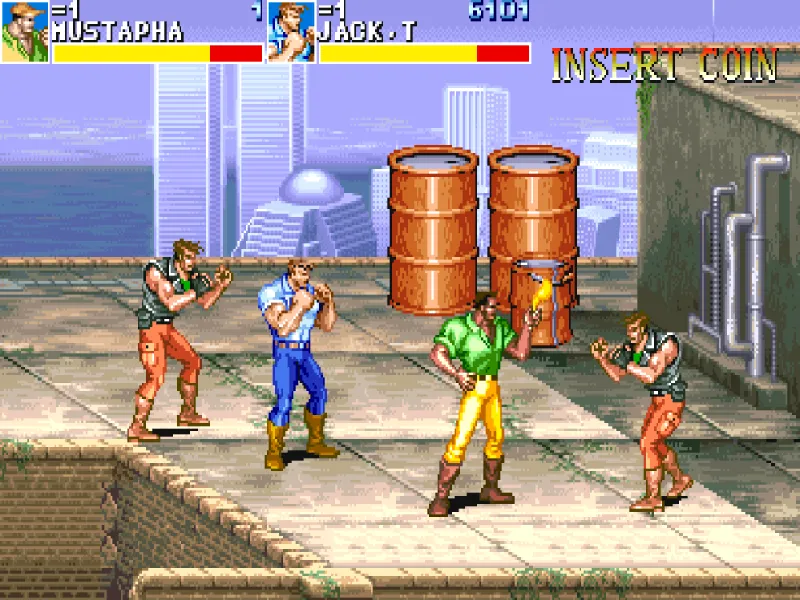
If you could only keep one beat 'em up, this would be it. It stands head and shoulders above its peers for three reasons: First, the four playable characters offer distinct playstyles (Mustapha for speed, Hannah for technique, Jack for balance, and Mess for grappling). Second, the level design and enemy placement are meticulously polished—there are no "filler" stages. Third, the dinosaurs aren't just a gimmick; these prehistoric creatures roam freely, attacking both players and enemies indiscriminately. Luring enemies toward a dinosaur to let it clear the screen for you is a unique and satisfying tactical layer.
2. Final Fight (1989, Capcom)
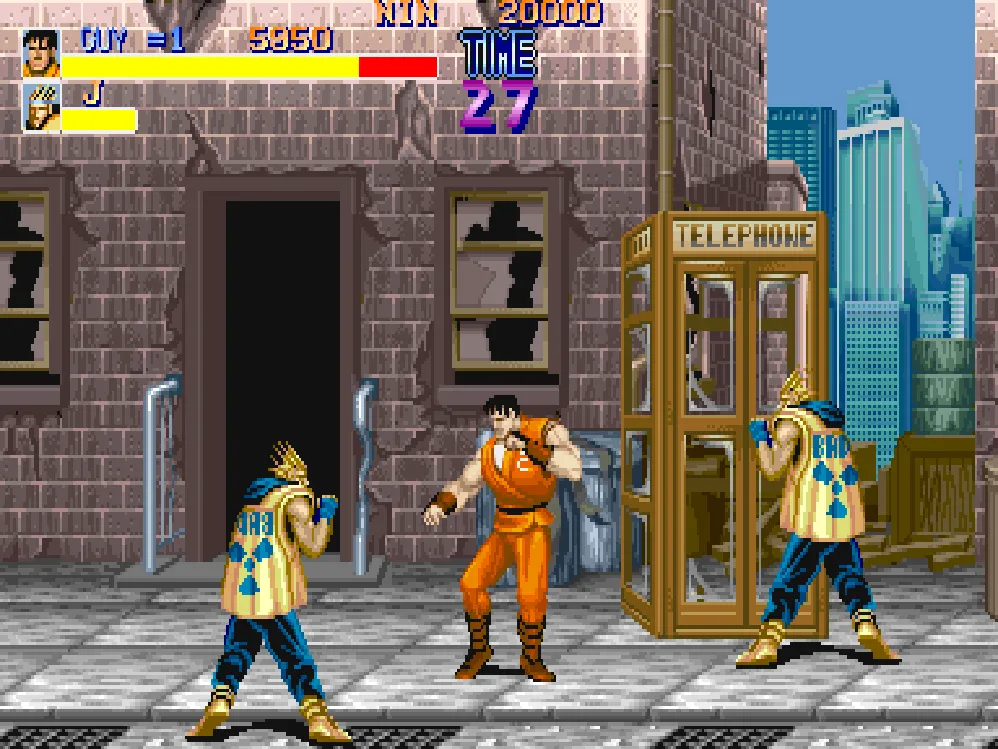
The genre-defining classic. While it may feel limited by today's standards (no running, no combo systems), compare it to 1989: the character differentiation, destructible environment objects, and the thrill of two-player co-op were revolutionary. The trio of Cody, Guy, and Haggar—representing speed, technique, and power—established the "triangular balance" model used by almost every beat 'em up that followed.
3. The Punisher (1993, Capcom)
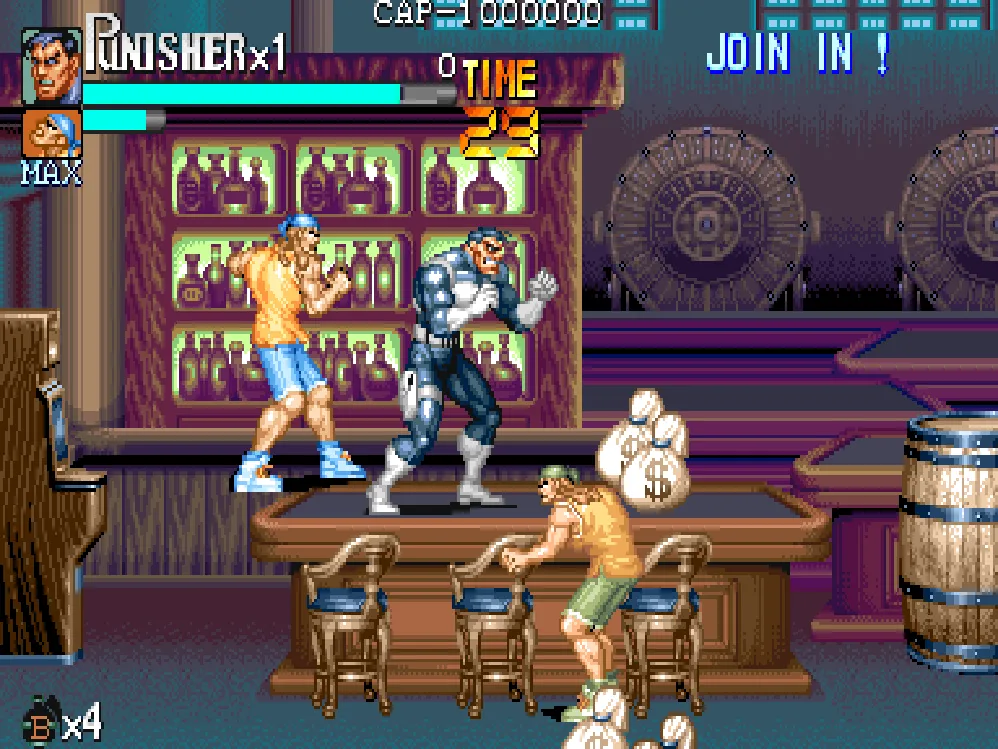
The gold standard for Marvel-licensed games. The design of Nick Fury as the 2P character makes for one of the best co-op experiences in the series. Grenades, firearms, and various environmental finishers add immense variety to the combat. The elevator fight in the second stage remains a textbook example of level design: space constraints + enemy wave pacing + dramatic boss entrance = a perfect three-act structure.
4. Captain Commando (1991, Capcom)
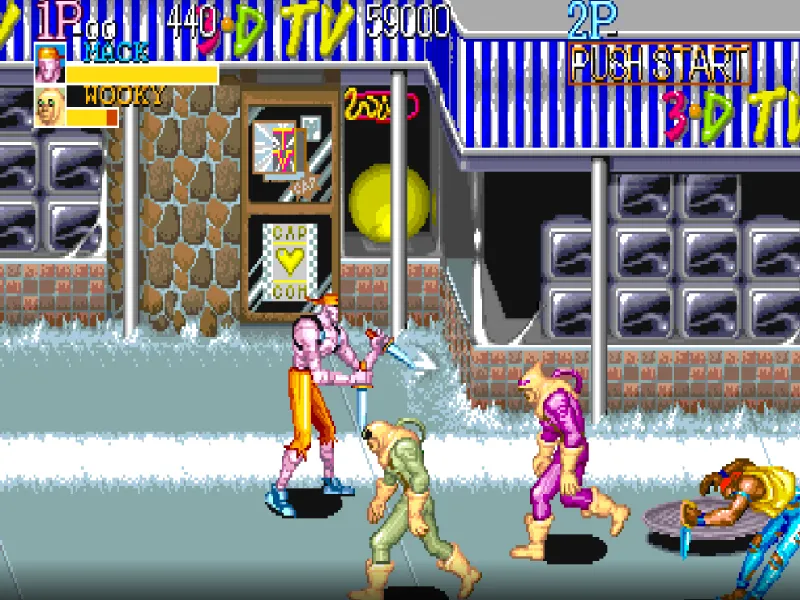
A four-player co-op beat 'em up. In 1991, four-player simultaneous action was a massive deal. It meant four friends could drop coins, pick characters, and jump into the fray together. This social experience is common in online games today, but back in the arcade, a four-player cabinet would draw a larger crowd than any other machine in the room.
5. Metal Slug X (1999, SNK)
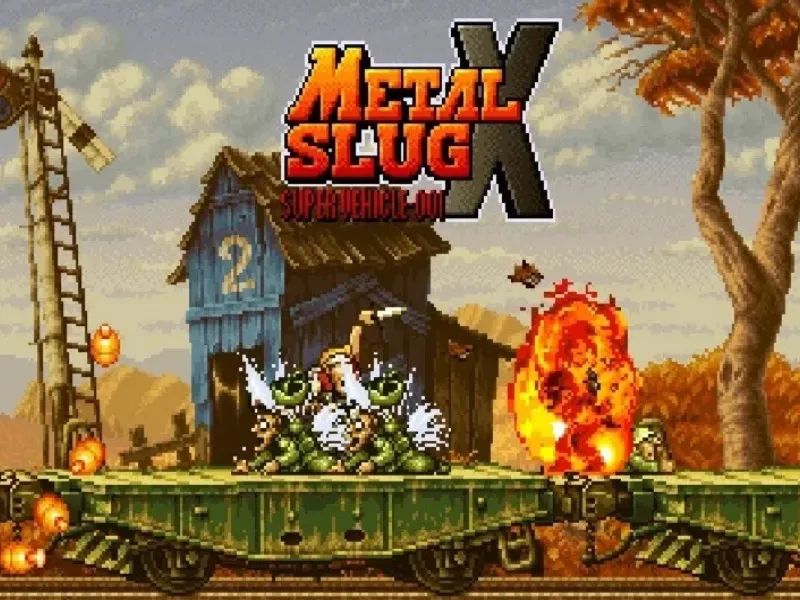
Technically, Metal Slug is a "Run & Gun" rather than a traditional beat 'em up, but it would be a crime to exclude this pinnacle of side-scrolling arcade action. Metal Slug X is an enhanced version of Metal Slug 2, fixing slowdown issues and adding new enemy configurations and hidden paths. Its pixel art remains the benchmark for 2D games—every pixel in every frame feels intentionally placed. The hand-drawn explosions, subtle character animations, and rich, humorous background details make this game a visual treat even in 2026.
II. Fighting
6. Street Fighter II' Turbo (1992, Capcom)
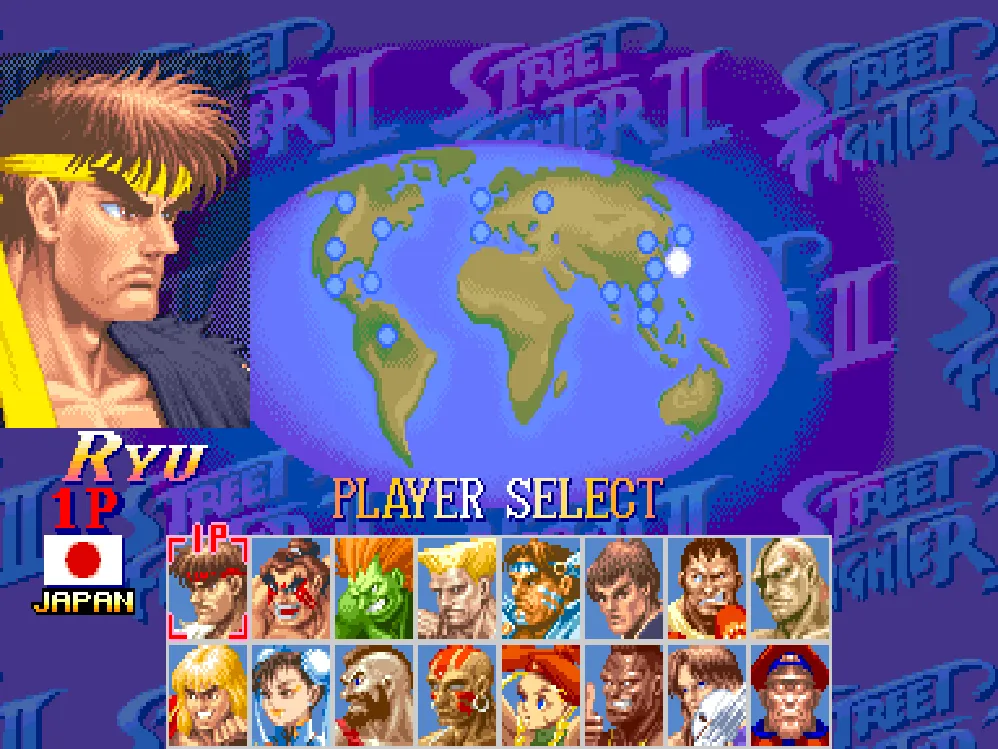
🎮 Play "Street Fighter II' Turbo: Hyper Fighting" in your browser →
Among the five Street Fighter II iterations, Turbo (Hyper Fighting) strikes the perfect balance between pacing and gameplay. The increased speed makes combat more aggressive, and new moves add depth to the neutral game. Because it lacks the "Super Combo" meters of later entries, victory depends more on fundamentals than a single comeback mechanic. This is the ultimate recommendation for any fighting game fan—you must understand the spacing and counter-attack logic of SFII to appreciate how the genre has evolved over the last thirty years.
7. The King of Fighters '98 (1998, SNK)
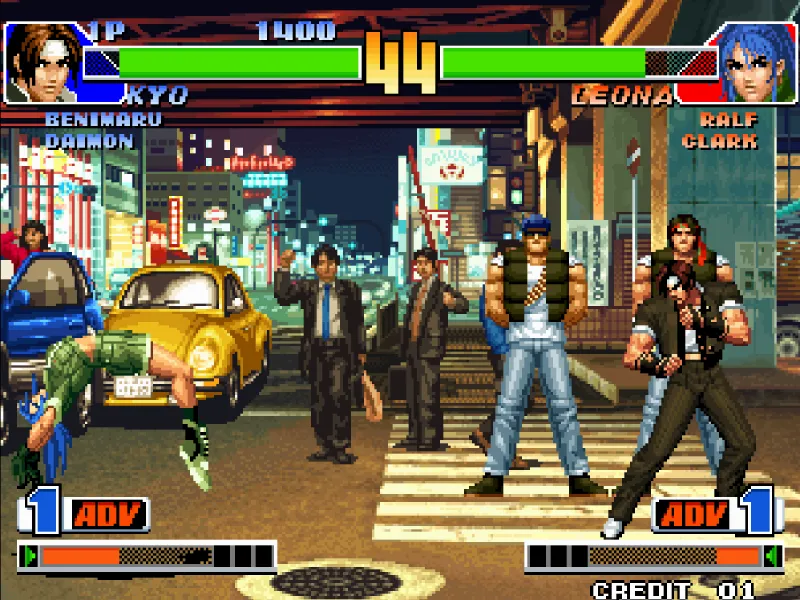
If Street Fighter II defined the 1v1 framework, KOF '98 defined the standard for 3v3 team fighting. With over 38 playable characters, two distinct combat modes (Advance and Extra), and a level of balance that has sustained a competitive community for three decades, KOF '98 remains incredibly active worldwide. While KOF '97 might have a larger nostalgic following in some regions, '98 is objectively the more refined masterpiece.
8. Samurai Shodown II (1994, SNK)
This is the pinnacle of weapon-based fighting. Unlike the high-frequency exchanges of punch-and-kick games, Samurai Shodown II is slower, with every strike carrying immense weight. A heavy slash can take off half your opponent's health—this high-risk, high-reward design creates a tension unlike anything in Street Fighter or KOF. The background art and character designs are iconic: Haohmaru's sake gourd, Ukyo's apple, Nakoruru's hawk—these elements have become symbols of fighting game culture.
9. Vampire Savior (1997, Capcom)
An criminally underrated fighting game masterpiece. With its gothic aesthetic, character-morphing systems, and highly free-form chain combos, it was far bolder in design than any other fighting game of its time. Unfortunately, it never received the global recognition it deserved. If you're tired of the standard Street Fighter or KOF experience, Vampire Savior will open your eyes to the true possibilities of 2D fighting.
III. Shoot 'em up (STG)
10. DoDonPachi DaiOuJou (2002, Cave)
The Mount Everest of bullet hell shooters. Cave is the undisputed king of the genre, and DaiOuJou is their most highly regarded work. With five ship types, two shooting modes (Shot and Laser), and a high-risk/high-reward Hyper system, the depth here is enough to keep players engaged for thousands of hours. It is also notoriously difficult—the "True Final Boss" Hibachi remains a challenge that only a handful of players can clear on a single credit.
11. Ikaruga (2001, Treasure)
An outlier in the bullet hell genre. The core mechanic is polarity switching: your ship can switch between black and white. You absorb bullets of the same color to charge energy and deal damage with opposite-colored bullets. This simple rule creates unprecedented strategic depth—every bullet pattern is no longer just something to "dodge," but a "rhythm puzzle" to solve. Ikaruga proves that shooters aren't just about reaction speed; they can be an intellectual challenge.
12. Strikers 1945 III (1999, Psikyo)
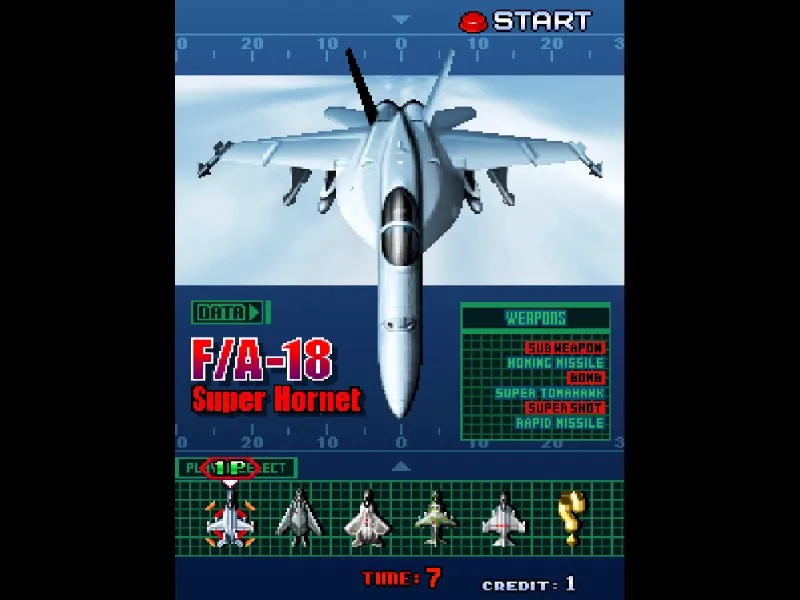
Psikyo is another titan of Japanese STGs, known for a faster, more direct style than Cave. Strikers 1945 III is the technical peak of the series, featuring modern fighter jets (F-117, F-4, AV-8, etc.) and dense, yet fair, bullet patterns. It's perfect for players who want a challenge but aren't ready for the "hell" difficulty of games like DaiOuJou.
13. Metal Slug 3 (2000, SNK)
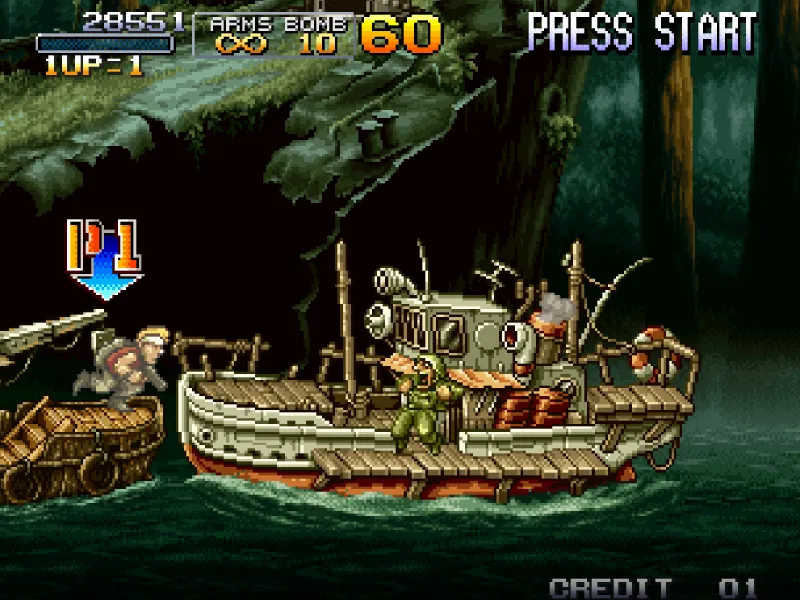
We categorize this as a shooter rather than a beat 'em up because its design far exceeds the first two entries and X. Branching paths, underwater stages, space levels, and zombie transformations—every stage introduces new mechanics that fundamentally change how you play. The final stage, a 20-minute marathon, is the ultimate test of a player's focus and resource management.
IV. Platformer
14. Ghouls 'n Ghosts (1988, Capcom)
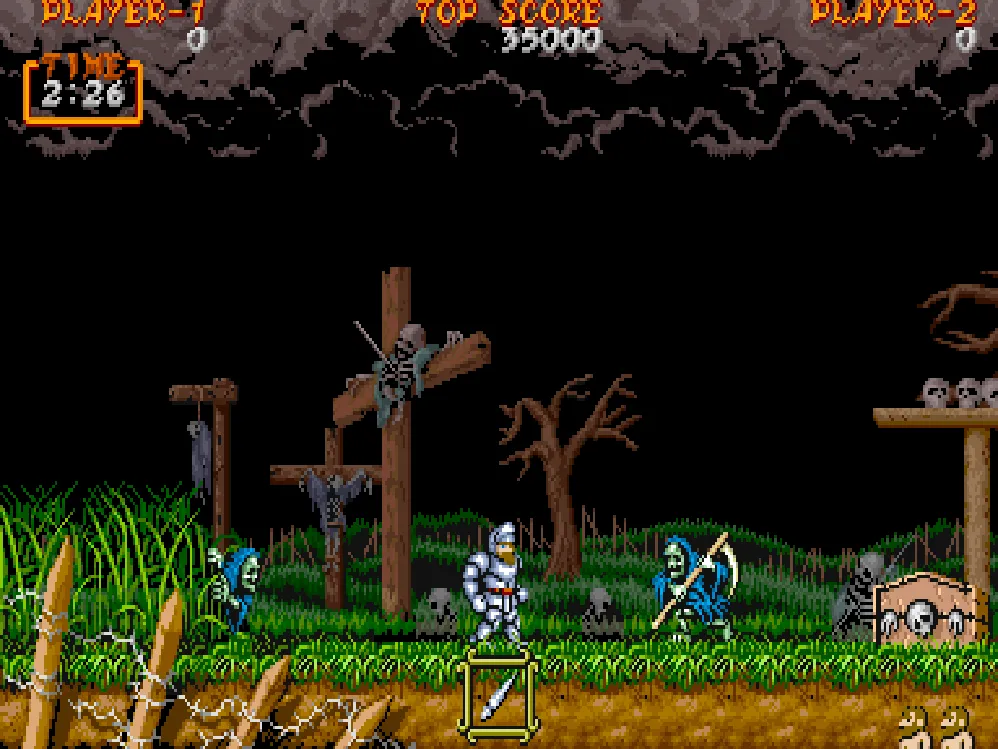
The debut title for the CPS1 board and one of the most challenging platformers ever made. The Golden Armor system (which allows for charged magic attacks), diverse weapon choices, and the "you must beat the game twice for the true ending" rule—Capcom's design density here is breathtaking. It's brutally difficult, but every death teaches you something: was it your positioning, your weapon choice, or your failure to predict enemy patterns?
15. Strider (1989, Capcom)
Speed. Fluidity. That is the essence of Strider. The protagonist, Strider Hiryu, features some of the most fluid animations in arcade history—climbing, sliding, and mid-air flips transition so naturally it feels like an animated film. In 1989, it achieved the "flow state" that modern action games still strive for today—that addictive immersion where your inputs and the screen's feedback are perfectly synced.
16. Magic Sword (1990, Capcom)
A severely underrated Capcom gem. The core mechanic is the "Partner System"—you rescue various NPCs (warriors, mages, ninjas, thieves, etc.) who follow you as AI assistants. Different combinations of partners lead to completely different playstyles, a highly forward-thinking design for 1990.
17. Battle Circuit (1997, Capcom)
One of the final beat 'em ups for the Capcom CPS2 board, and arguably the most creative. The five playable characters have completely unique mechanics (one character's core move involves turning into a ball and rolling around), and the game adds shop-based upgrades and character progression. Its humor and visual style are unique among Capcom titles, full of self-deprecation and meta-elements.
V. Sports
18. NBA Jam (1993, Midway)
A basketball game that's fun even if you don't know the rules of basketball. Over-the-top dunks (backboard-shattering, 720-degree spins), the "He's on fire!" mechanic, and iconic real-time commentary—NBA Jam perfectly captures the core arcade philosophy: realism doesn't matter, fun does.
19. Super Sidekicks (1992–1996, SNK)
SNK's soccer series and a staple of the Neo Geo platform. Compared to the simulation-heavy FIFA or PES of the era, Super Sidekicks focuses on fast-paced, arcade-style thrills. The use of zoom-in camera angles was stunning at the time—when you approach the penalty area, the camera automatically zooms in, giving every goal a dramatic, cinematic impact.
20. Windjammers (1994, Data East / SNK)
A unique disc-throwing battle game. Two players defend their goals, throwing a disc back and forth like volleyball. Simple rules, but an incredibly high skill ceiling. Windjammers was revived by SNK years later and remains active in the fighting game community today because its feel, rhythm, and competitive depth are cut from the same cloth as the best fighting games.
VI. Puzzle & Casual
21. Puzzle Bobble / Bust-A-Move (1994, Taito)
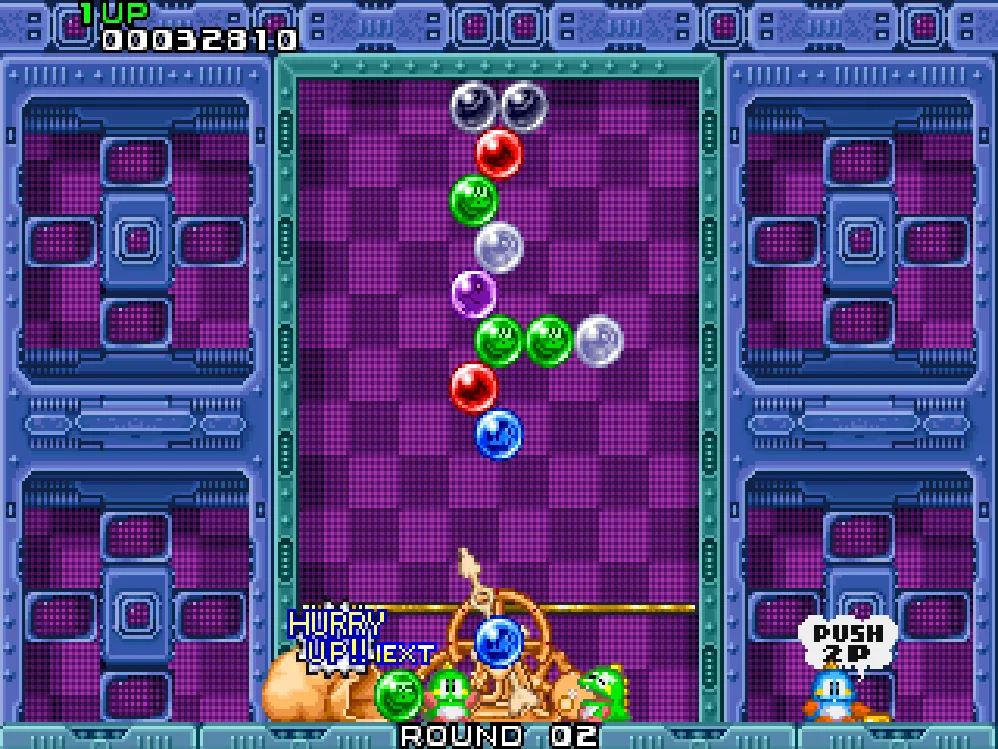
Puzzle Bobble's bubble-popping gameplay is perhaps the most "accessible" of all arcade games. Yet, the difficulty curve is masterfully designed: the first 10 levels make you feel like a genius, level 20 requires strategy, level 30 requires precision, and level 50+ requires luck. The two-player versus mode turns a casual puzzle game into a high-intensity competitive experience.
22. Tetris (1988, Atari Games Arcade Version)
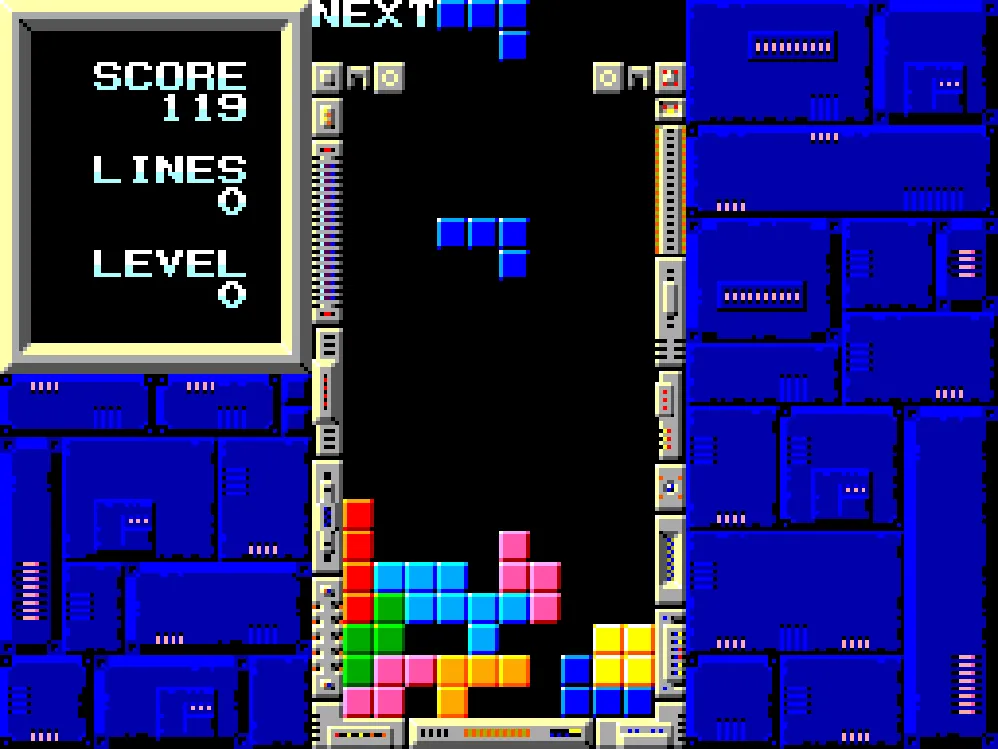
Of course, Tetris is here. Atari's 1988 official arcade version is the only one that truly "belongs" in the arcade—it introduced the two-player versus mode, where clearing lines sends garbage to your opponent. This was the birth of competitive Tetris and the spiritual ancestor of today's global championships.
23. Snow Bros. (1990, Toaplan)
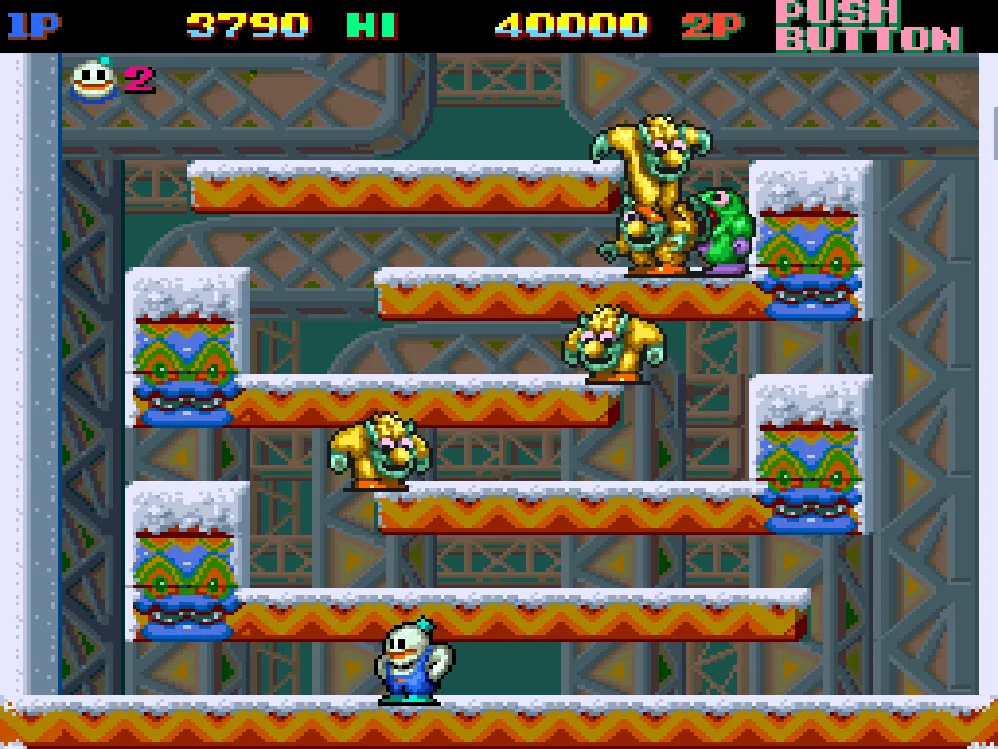
Roll enemies into snowballs and kick them to clear a whole row—Toaplan used this simple concept to create one of the most addictive single-screen platformers ever. Snow Bros. features 50 meticulously designed levels with a boss every 10 stages. Its two-player co-op mode is its greatest charm—snowballs can collide and trigger chain reactions, allowing for dazzling combos when you and your partner are in sync.
24. In The Hunt (1993, Irem)
Irem was the developer behind the predecessor to Metal Slug. In fact, the core team behind Metal Slug jumped from Irem to SNK. In The Hunt is their Irem-era masterpiece—piloting a submarine through an underwater world. With exquisite hand-drawn pixel art, rich enemy design, and the rare "submarine" protagonist, it remains a unique entry in the side-scrolling shooter genre.
25. Strikers 1945 II (1997, Psikyo)
A perfect companion to Strikers 1945 III. The second entry features WWII-era propeller planes (Zero, P-38, Spitfire, etc.) with a slightly slower but denser bullet pattern than the third game. Both 1945 titles are the best entry points for bullet hell STGs—they provide enough challenge to be rewarding without overwhelming newcomers in the first stage.
Quick Reference: Choose by Need
| If you want... | Start with these |
|---|---|
| Fun with friends | Captain Commando, Metal Slug X, Cadillacs and Dinosaurs |
| A solo challenge | DoDonPachi DaiOuJou, Ikaruga, Ghouls 'n Ghosts |
| Competitive play | Street Fighter II' Turbo, KOF '98 |
| Relaxing stress relief | Puzzle Bobble, Snow Bros., NBA Jam |
| Peak pixel art | Metal Slug 3, Vampire Savior |
| Arcade design philosophy | Final Fight, Street Fighter II' Turbo, Samurai Shodown II |
Final Thoughts
This list is missing many equally excellent games—Thunder Dragon, Mushihimesama, Warriors of Fate, Shinobi, Elevator Action, Fatal Fury... 25 is far from enough. But this is a starting point: every game selected represents an extreme of arcade design. Play through them, and you will understand the Golden Age of Arcade Gaming.
About Unlisted Games: Of the 25 classic arcade games recommended in this article, 14 are already included in the Arcade Game Box library and can be played for free online by clicking the screenshots or game titles. The 11 games not yet included—Samurai Shodown II, Vampire Savior, DoDonPachi DaiOuJou, Ikaruga, Strider, Magic Sword, Battle Circuit, NBA Jam, Super Sidekicks, Windjammers, and In The Hunt—will be added in future updates.