1. Game Background
1.1 World Setting
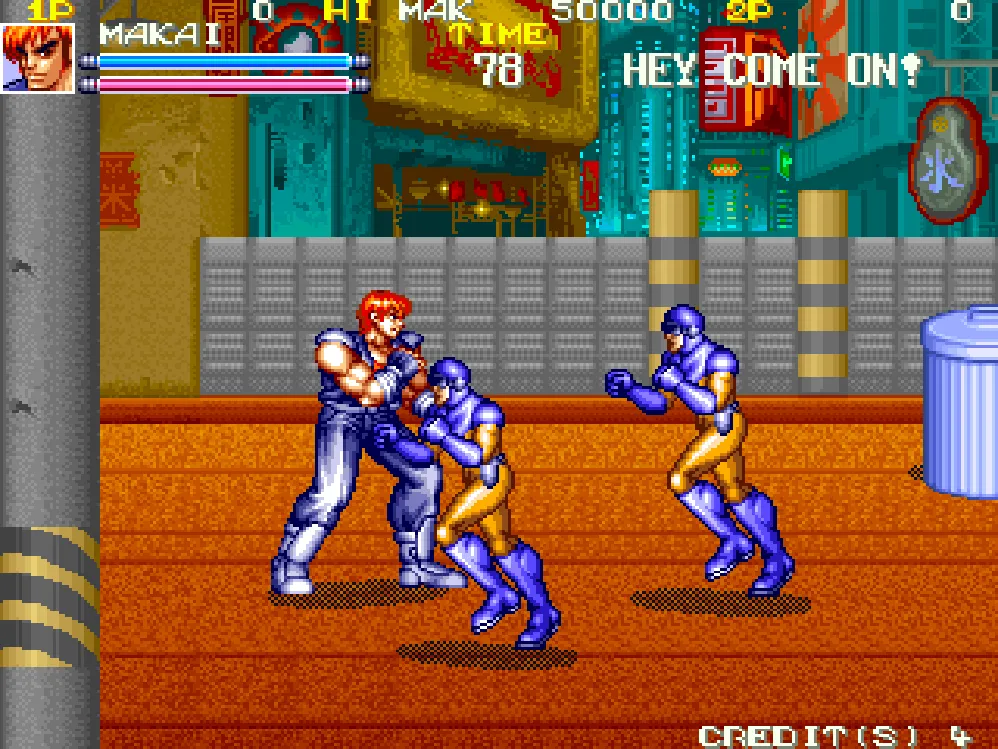
The story of Denjin Makai is set in a Far Eastern nation in the year 2079. In this highly advanced future, a supercomputer covering the entire country manages the city—from traffic lights to crime prevention, everything is controlled by algorithms. Theoretically, crime should be non-existent.
However, there are always those who find the system's loopholes. These criminals, who evade the supercomputer's surveillance, are known as "Ghosts"—they move through the city's information networks like phantoms, plotting subversive terrorist acts in the system's blind spots. To counter this unprecedented threat, the government secretly formed a special armed police unit—the Ghost Chaser—tasked with hunting down these outlaws who walk between the digital and physical worlds.
The game's art style blends the cold, metallic aesthetic of cyberpunk with the heroic flair of Japanese Tokusatsu. Neon-lit damp streets, high-tech laboratories filled with mechanical pipes, and city infrastructure spiraling out of control due to hacking—every scene tells a story of a technological society gone rogue. The protagonists, fighting with their fists in such a world, resemble future warriors straight out of a 1990s Japanese Tokusatsu show—which explains why legendary manga artist Go Nagai (creator of Devilman and Mazinger Z) illustrated the arcade promotional poster for this title.
1.2 Development History
Denjin Makai was developed by Japan's Winkysoft and published by Banpresto, debuting on arcade hardware on February 1, 1994. Winkysoft was famous for the Super Robot Wars series, and Denjin Makai was their first—and highly successful—foray into the side-scrolling beat-'em-up genre.
Banpresto invested significant marketing resources into the game, commissioning legendary manga artist Go Nagai to create the main visual for the arcade poster. Nagai's signature rugged lines and exaggerated muscularity created a fascinating chemistry with the game's cyberpunk world—a poster still considered a treasure by Japanese arcade collectors today.
The game's soundtrack was composed by Noboru Yamane. He created a score that blends electronic synthesizers with hard rock—the synths evoke the coldness of cyberspace, while the guitars and drums inject an adrenaline-pumping rhythm into the side-scrolling combat.
On September 23 of the same year, a Super Famicom (SFC) port titled Ghost Chaser Densei (ゴーストチェイサー電精) was released exclusively in Japan. Due to hardware limitations, the SFC version reduced the playable characters from six to three (the removed three became bosses in the game) and deleted an entire level. Famitsu gave it a score of 23/40—the lukewarm reception caused this port to be quickly forgotten.
In 1995, Winkysoft released a sequel, Guardians (also known as Denjin Makai II), which featured comprehensive upgrades to the system and visuals. However, the original Denjin Makai holds an irreplaceable place in the hearts of retro arcade fans due to its unique world-building, the involvement of Go Nagai, and its solid combat depth.
2. Character Introduction
The arcade version features six playable characters, including cyborgs, psychics, and alien beings.
2.1 Makai — The Lightning Striker
| Attribute | Rating |
|---|---|
| Power | ★★★★ |
| Speed | ★★★★ |
| Skill | ★★★ |
| Difficulty | ★★ |
- Features: Short orange hair, wearing a black combat vest, excels in high-speed combat.
- Strengths: Balanced stats; attack speed and damage output are above average; dash attacks are fast and have strong hit detection; the best character for beginners.
- Weaknesses: Special move energy efficiency is average—requires careful management of the energy gauge in high-difficulty levels.
- Verdict: Makai is the cover star of Denjin Makai. He isn't the strongest or the fastest, but he strikes the most comfortable balance between power and speed. Beginners can't go wrong with him.
2.2 Iyo — The Storm of the Mace
| Attribute | Rating |
|---|---|
| Power | ★★★★★ |
| Speed | ★★ |
| Skill | ★★★★ |
| Difficulty | ★★★ |
- Features: A muscular fighter wielding a mace; has the highest attack power in the game.
- Strengths: The mace's reach and single-target damage are unrivaled; excellent throwing mechanics—different directions result in different throws, providing strong close-quarters control.
- Weaknesses: Slowest movement speed; long recovery time after weapon attacks makes him vulnerable to fast enemies.
- Verdict: A classic power-type character. Swinging Iyo's mace through a dense crowd of enemies is incredibly satisfying—one swing clears the path ahead.
2.3 Belva — The Dancer of the Sky
| Attribute | Rating |
|---|---|
| Power | ★★★ |
| Speed | ★★★★★ |
| Skill | ★★★★ |
| Difficulty | ★★★★ |
-
Features: The only character with a Double Jump ability.
-
Strengths: The double jump grants her unique aerial mobility—allowing her to adjust position in mid-air, dodge ground projectiles, and launch attacks that are difficult for enemies to defend against.
-
Weaknesses: Lower single-hit damage and lower health.
-
Verdict: The ultimate technical character. Belva's double jump isn't just for movement—it's the core of her fighting style. Changing direction in mid-air, disrupting enemy AI pathfinding, and raining attacks from above—this playstyle was extremely rare in 1994 beat-'em-ups.
2.4 Kurokishi — The Iron Guardian
| Attribute | Rating |
|---|---|
| Power | ★★★★ |
| Speed | ★★★ |
| Skill | ★★★★ |
| Difficulty | ★★★ |
- Features: A warrior in heavy armor, balanced in both offense and defense.
- Strengths: Highest defense in the game; possesses stable super-armor and reliable normal attack range.
- Weaknesses: Slow speed; became a boss in the SFC port.
- Verdict: Kurokishi is the iron wall of the team. If you need a character to stand in the front line and soak up damage in co-op, he is your most reliable teammate. His "demotion" in the SFC version is a point of regret for many veteran players.
2.5 Zeldia — The Alien Hunter
| Attribute | Rating |
|---|---|
| Power | ★★★★ |
| Speed | ★★★ |
| Skill | ★★★★★ |
| Difficulty | ★★★★ |
- Features: An armored alien with the most unique skill set in the game.
- Strengths: The grab special move (2+1) drains health when hitting organic enemies—the only life-steal mechanic in the game; possesses hidden moves like fire breath and multi-missile barrages.
- Weaknesses: Some skills can only be activated at very low health (red health status); command inputs are quite obscure.
- Verdict: Zeldia's life-steal ability gives her unparalleled endurance in long battles. Her hidden skill set has yet to be fully mapped out by the player community—for players who love "digging for secrets," Zeldia is the most rewarding character to explore. She was also demoted to a boss in the SFC version.
2.6 Tulks — The Heavy Artillery
| Attribute | Rating |
|---|---|
| Power | ★★★★★ |
| Speed | ★★ |
| Skill | ★★★ |
| Difficulty | ★★ |
- Features: Heavy armor with large-caliber weaponry—the largest character in the game.
- Strengths: Single-hit damage is tied with Iyo for the highest; massive attack range, with some moves covering nearly half the screen.
- Weaknesses: Slowest movement speed and largest hitbox.
- Verdict: Tied with Iyo as one of the two powerhouses. Tulks' advantage lies in his range—he doesn't need precise positioning like other characters; just standing in a crowd and swinging is enough to clear a large area. He was also demoted to a boss in the SFC version.
3. Controls
3.1 Basic Controls
Denjin Makai uses a standard 8-way joystick + 2-button layout, but its combat depth far exceeds contemporary beat-'em-ups:
| Action | Input | Description |
|---|---|---|
| Attack | Button 1 | Up to 4-hit combo; can change direction before the last hit |
| Jump | Button 2 | Normal jump (Belva has a unique double jump) |
| Guard | Hold Button 1 | Standing guard, reduces damage taken |
| Back Attack | Back + Button 1 | Attacks enemies behind without turning around |
| Back Dash | Back + Button 2 | Jump backward to dodge |
| Run | →→ (Hold direction) | Fast dash movement |
| Grab | Auto-grab near enemy | After grabbing, press 1 to strike (up to 3 hits) or Dir+1/2 to throw |
| Ground Attack | Press 1 near downed enemy | Deals extra damage to downed enemies |
| Wake-up Attack | Auto-trigger when knocked down | All characters release a radial attack when getting up |
3.2 Special Moves and Energy Gauge
Energy Gauge System: There is a special move energy gauge at the bottom of the screen. Using a special move consumes about half the gauge—once depleted, you cannot use special moves, and the character enters a brief exhausted state. The gauge recovers rapidly when the character stands still—this design encourages players to find tiny "breathing windows" to recover spellcasting ability during intense combat.
Special Move (2+1): Press Jump + Attack simultaneously to trigger the character's unique special move—consumes about half a gauge. Can be triggered while running (hold dash direction while pressing 2+1). Can also be triggered after a half-circle command (Back→Forward) + Attack—this command replaces the need for a running start and is more practical in tight spaces.
Co-op Combo Move: When playing with two players, one player can "throw" the other—the thrown player can launch a jump attack in mid-air. If both players press 2+1 simultaneously during a throw, it consumes half a gauge from each player to trigger a Super Co-op Combo—damage and range far exceed normal special moves.
Zeldia's Life-Steal: After grabbing an organic enemy (robots are immune), Zeldia can press 2+1 to drain the enemy's health to restore her own. This is the only healing mechanic in the game.
4. Level Walkthrough and Boss Guide
The arcade version of Denjin Makai spans every corner of the near-future city of 2079. The SFC version deleted an entire level.
Level Overview
| Level | Scene | Theme | Boss Strategy |
|---|---|---|---|
| 1 | City Streets | City infrastructure hacked by Ghosts—runaway vehicles and malfunctioning robots everywhere | Boss is a large mechanical guard—use dash to dodge frontal fire and flank to attack |
| 2 | Underground Lab | High-tech bio-experimental facility with modified creatures floating in tanks | Boss has multiple ranged attacks—keep moving and use dash specials to close the gap |
| 3 | Data Center | Core area of the supercomputer, filled with holograms and laser fences | Mid-boss is a heavy security robot hacked by Ghosts—prioritize destroying its side weapon modules |
| 4 | Industrial Zone | Abandoned automated factory; conveyor belts and robotic arms are deadly traps | Dense environmental hazards—avoid being pulled into crushing zones. Boss is huge but slow |
| 5 | Ghost Base | The Ghost organization's lair—dark, narrow corridors and trap-filled control rooms | One of the mid-bosses is the three former teammates (demoted in SFC version)—they have the same skill sets as players |
| Final | Command Tower | The command center where the Ghost leader resides—where all city data flows converge | Final boss has full-screen data attacks and can summon minions—clear minions first, then use combo moves during the boss's recovery frames |
5. Tips and Advanced Strategy
5.1 Basic Survival Tips
- Energy Gauge Management is Key: Special moves consume half the gauge. Depletion leads to exhaustion. Learn to find safe "standing windows" to recover energy—standing still is the fastest way.
- Don't Waste Wake-up Attacks: All characters automatically perform a wake-up attack when getting up—this makes being knocked down not purely a disadvantage. However, if there are no enemies around, it's a wasted opportunity (as there is a recovery lag after the attack).
- Weapons Have Durability: Weapons picked up from enemies or the environment (like guns or energy swords) have limited uses. Getting knocked down too many times drops the weapon. Weapons also disappear when entering new areas—don't be afraid to use them.
- Belva's Double Jump is a Tactical Tool: In crowded areas, double jump + jump attack can strike from unexpected angles. Most enemy AI is only programmed to predict ground and single-jump attacks; the double jump will leave them "confused."
- Zeldia's Life-Steal Only Works on Organics: Don't try to use it on robots or mechanical bosses—it will be completely ineffective. In robot-heavy levels like Level 3 (Data Center), Zeldia's endurance advantage is significantly reduced.
5.2 Co-op Tips
- Throwing Teammates is the Best Opener: One player throws the other into the crowd—the thrown player can attack immediately in mid-air. This is much safer than both players rushing in from the ground.
- Save Combo Moves for Bosses: Co-op combo moves consume half a gauge each but deal massive damage. Use them when the boss's health is below 50% to end the fight quickly.
- Character Pairing Suggestions: Makai (balanced front-liner) + Iyo or Tulks (heavy artillery). Or Iyo (tank) + Zeldia (life-steal endurance + mid-range control).
5.3 Advanced Knowledge
- Combo-to-Throw Transition: Before the last hit of a normal combo, if you push the joystick in the opposite direction of the enemy, the final hit becomes a throw—tossing the enemy and dealing area damage. This high-level technique is what separates pros from casual players.
- Dash Specials Save Energy: Triggering a special move (2+1) while running consumes slightly less energy than standing still—because you already have "momentum."
- Half-Circle Commands Replace Running: Back→Forward + Attack can replace the run→special move chain. In tight spaces (like the corridors of the Underground Lab) where you can't dash, the half-circle command is the only way to trigger specials.
- SFC Version Additions: Although the Ghost Chaser Densei port cut characters and levels, it added a Charge Super Move system: Input direction commands (Down→Up or Back→Forward) while guarding, then release the attack button—if you hold the attack button to charge, the super move glows yellow and deals significantly higher damage.
6. Trivia and Arcade Legends
6.1 Go Nagai's Poster — Cyberpunk Blessed by a Master
The arcade promotional poster for Denjin Makai was illustrated by legendary manga artist Go Nagai. As the creator of Devilman, Mazinger Z, and Cutie Honey, his rugged, powerful line style and exaggerated muscularity injected a visual impact into the protagonists that far exceeded contemporary arcade game posters. Banpresto's choice of Go Nagai was a brilliant match—the theme of "human and demon/machine symbiosis" in Nagai's work resonates with the "cyborgs fighting system loopholes" setting of Denjin Makai. This poster remains a highly sought-after collectible in the Japanese arcade community.
6.2 Six to Three — Compromise and Creativity in the SFC Port
Due to Super Famicom hardware limitations, the Ghost Chaser Densei port reduced the playable characters from six to three (Makai, Iyo, Belva). However, the removed Kurokishi, Zeldia, and Tulks weren't deleted—they were redesigned as level bosses, allowing veteran players to "reunite" with them during the game. This "teammate-turned-opponent" design added narrative depth to the port, though most players still wished they were playable.
6.3 The Missing Sixth Level
In addition to cutting characters, the SFC version deleted an entire level. According to community analysis, the deleted level was likely the arcade's Level 4 (Industrial Zone) or Level 5 (Ghost Base)—as these levels contained massive dynamic mechanical backgrounds and multi-layered parallax scrolling, effects difficult to achieve on SFC hardware. The SFC version has a fixed level path, removing the branching choices of the arcade original.
6.4 The Sequel Guardians — Evolution of the System
In 1995, Winkysoft released the sequel Guardians (also known as Denjin Makai II). The sequel featured major upgrades in visual quality, character count, and combat systems: adding multiple playable characters (including a robot character that became a cult classic), optimizing the energy consumption curve for special moves, and adding richer environmental interactions. Guardians is widely considered by the core community to be the "complete version of Denjin Makai"—though the original's Go Nagai poster and cyberpunk world remain its unique charm.
6.5 Winkysoft's Hidden Legacy
Winkysoft is best known as the developer of the Super Robot Wars series—a massive strategy RPG franchise that defined the "robot crossover" genre. But beneath the halo of SRW, Winkysoft also left its mark on side-scrolling beat-'em-ups and fighting games. Denjin Makai and its sequel Guardians represent their highest achievements in action games. In 2015, Winkysoft ceased operations due to financial difficulties. Looking back at their legacy today, Denjin Makai and Guardians have evolved from "forgotten second-tier titles" into hidden classics frequently mentioned and missed by the beat-'em-up community.