I. Game Background
1.1 World Setting
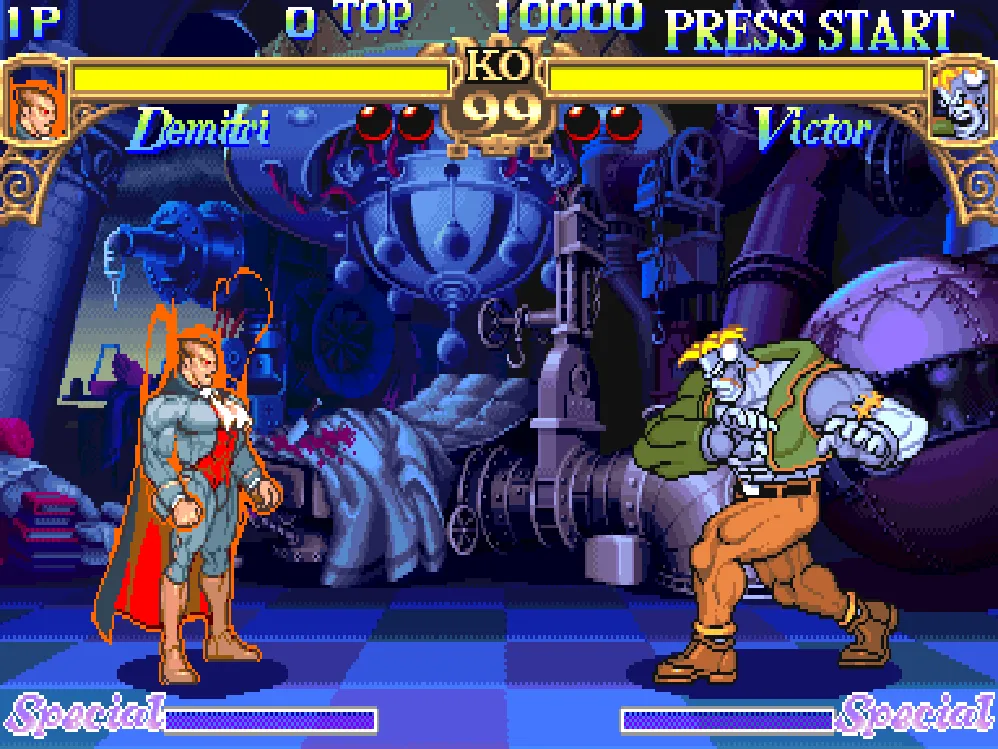
Darkstalkers: The Night Warriors (originally released in Japan as Vampire: The Night Warriors) builds a gothic fantasy world where creatures of the night hide among humans, battling in the shadows. The game's setting spans global mythology—from vampire castles in Transylvania to Egyptian pyramids, and from werewolf-haunted Scottish Highlands to Yeti caves in the Andes. Every character is a fighting-game reimagining of classic monster legends.
The main plot centers on Pyron, an extraterrestrial entity who treats planets as snacks and views Earth as his next collectible. As humanity faces extinction, the most unlikely saviors—demons, vampires, werewolves, and zombies—become the final line of defense. This dark civil war unexpectedly decides the fate of mankind. This "monsters saving humanity" subversion was a bold narrative choice for a 1994 fighting game.
1.2 Development History
Released by Capcom in July 1994, Darkstalkers ran on the proprietary CPS-2 (CP System II) arcade hardware. It was the second title for the platform following Super Street Fighter II Turbo, but it was actually the first original project developed specifically for CPS-2 by Capcom's fighting game team—Super Turbo served more as a testbed for the new hardware.
There are various accounts regarding the game's creative origins: Art Director Akira Yasuda (AKIMAN) claimed his colleague "Akitomo" proposed the "monster fighting" concept, which was refined by Junichi Ohno. Ohno recalled the idea emerging during a Capcom brainstorming session, initially focusing on Japanese yokai before expanding to global mythological creatures. Producer Alex Jimenez provided the most dramatic version: the game was originally pitched as a licensed Universal Monsters title, but after Universal declined, the team created original characters. Each story holds some truth, perhaps reflecting the project's evolution.
The development team drew visual inspiration from classic Warner Bros. and Hanna-Barbera cartoons, aiming for character movements and expressions with more elasticity and flair than Street Fighter II. Haruo Murata joined the project at the invitation of Noritaka Funamizu, focusing on character personality and world-building. He deliberately broke the convention that fighting game endings must be "happy," resulting in dark or even tragic conclusions for some characters—a controversial decision at the time.
Commercially, Darkstalkers was a significant success: it sold 24,000 arcade cabinets worldwide, ranked fourth in Japanese arcade earnings for 1994, and won an AAMA Golden Award in the US. VideoGames magazine named it the Best Arcade Game of 1994.
II. Character Profiles
The original Darkstalkers features 10 playable characters and 2 bosses. Each is based on a classic monster archetype, yet given unique personality and charm by Capcom's art team.
4.1 Starting Characters
Demitri Maximoff
| Attribute | Rating |
|---|---|
| Attack | ★★★★☆ |
| Speed | ★★★☆☆ |
| Specials | ★★★★★ |
| Difficulty | ★★★☆☆ |
- Archetype: Vampire. A centuries-old Romanian count exiled to the human world after failing to conquer the Demon Realm.
- Signature Moves: Demon Cradle (an anti-air combo) and Midnight Bliss (transforms the opponent into a helpless maiden before draining their blood).
- Verdict: A standard "Fireball + Dragon Punch" character, making him the most intuitive choice for Street Fighter players. Midnight Bliss remains one of the most creative super moves in fighting game history, with unique designs for every character transformed.
Morrigan Aensland
| Attribute | Rating |
|---|---|
| Attack | ★★★☆☆ |
| Speed | ★★★★★ |
| Specials | ★★★★☆ |
| Difficulty | ★★★☆☆ |
- Archetype: Succubus. The heir to the prestigious Aensland family of the Demon Realm, possessing the power to manipulate dreams. Outwardly hedonistic, she hides a deep, unspoken loneliness.
- Signature Moves: Soul Fist (a fireball that can be fired in mid-air, a full year before the Street Fighter series) and Shadow Blade (a vertical drill attack).
- Verdict: Morrigan is the most iconic character of the series and one of the most popular female fighters in the Capcom all-star roster. Her design—bat wings, alluring style, and hidden tenderness—defined Capcom's "dark aesthetic."
Felicia
| Attribute | Rating |
|---|---|
| Attack | ★★☆☆☆ |
| Speed | ★★★★★ |
| Specials | ★★★☆☆ |
| Difficulty | ★★★★☆ |
- Archetype: Werecat. Raised by a nun, this cat-girl dreams of becoming a musical star in the human world.
- Signature Moves: Rolling Buckler (a fast, low-profile dash) and Hell Cat (a multi-hit aerial kick).
- Verdict: Among the dark cast, Felicia’s "dreamer" persona is a ray of light—she has the warmest backstory and the most optimistic outlook. A speed-based character with high combo density but lower damage, requiring strong execution skills.
Jon Talbain
| Attribute | Rating |
|---|---|
| Attack | ★★★★☆ |
| Speed | ★★★★☆ |
| Specials | ★★★★☆ |
| Difficulty | ★★★☆☆ |
- Archetype: Werewolf. A cursed British gentleman who is a martial artist by day and a werewolf by night. He seeks to break his curse rather than embrace his beastly nature.
- Signature Moves: Beast Cannon (a high-speed dash punch) and Dragon Cannon (a rising uppercut).
- Verdict: The best transition character for Street Fighter players. His move logic (dash punch + uppercut) is highly compatible with the "Ryu + Ken" system, though his frame data and speed offer a distinct feel. His name is a nod to Larry Talbot from the 1941 film The Wolf Man.
Victor von Gerdenheim
| Attribute | Rating |
|---|---|
| Attack | ★★★★★ |
| Speed | ★☆☆☆☆ |
| Specials | ★★★☆☆ |
| Difficulty | ★★★☆☆ |
- Archetype: Frankenstein's Monster. A giant construct created by the mad scientist Professor Gerdenheim, possessing a pure heart and destructive power.
- Signature Moves: Gyro Crush (a spinning electric shock) and Grab & Slam (a multi-hit throw combo).
- Verdict: A classic "grappler." He has the slowest movement speed, but once he gets close, his throw damage is devastating. His design pays homage to Mary Shelley's 1818 novel, with "Frankenstein" cleverly adapted to "Gerdenheim."
Lord Raptor (Zabel Zarock)
| Attribute | Rating |
|---|---|
| Attack | ★★★★☆ |
| Speed | ★★★☆☆ |
| Specials | ★★★☆☆ |
| Difficulty | ★★★★☆ |
- Archetype: Zombie + Heavy Metal. A murdered Australian rock guitarist resurrected as a zombie to continue his insane performances.
- Signature Moves: Death Voltage (electric attacks using his guitar) and Skull Stinger (firing his own skull as a projectile).
- Verdict: The most "cult film" character in the cast. His moves blend guitar riffs with zombie dismemberment—he casually detaches his own limbs and head to use as weapons.
4.2 Unlockable Characters
Anakaris
| Attribute | Rating |
|---|---|
| Attack | ★★★★☆ |
| Speed | ★★☆☆☆ |
| Specials | ★★★★☆ |
| Difficulty | ★★★★★ |
- Archetype: Mummy / Pharaoh. An ancient Egyptian pharaoh awakened by modern corruption, determined to rule humanity once more.
- Signature Moves: Cobra Strike (arm extends into a cobra for long-range pokes) and Pharaoh's Curse (shrinks the opponent).
- Verdict: A high-level zoning character. His massive hitbox is a liability, but he has the longest reach in the game. Similar to Dhalsim from Street Fighter, but with more visually striking transformation attacks.
Bishamon
| Attribute | Rating |
|---|---|
| Attack | ★★★★★ |
| Speed | ★★★☆☆ |
| Specials | ★★★★☆ |
| Difficulty | ★★★★☆ |
- Archetype: Cursed Samurai Armor. An antique dealer who donned a cursed suit of armor from the Sengoku period, only to have his body possessed by the armor's vengeful spirit.
- Signature Moves: Spirit Crusher (a massive strike with a spectral soul) and Darkness Wave (a full-screen shockwave).
- Verdict: The most Japanese horror-inspired design in the game. The armor breathes, bleeds, and cries—details rendered in shocking detail via CPS-2 frame-by-frame animation. He deals the highest damage but has the longest recovery frames.
Rikuo (Aulbath)
| Attribute | Rating |
|---|---|
| Attack | ★★★☆☆ |
| Speed | ★★★☆☆ |
| Specials | ★★★☆☆ |
| Difficulty | ★★★★☆ |
- Archetype: Merfolk / Gill-man. The king of an aquatic race from the deep lakes of the Brazilian rainforest.
- Signature Moves: Sonic Wave (water jet) and Aqua Spread (splitting into bubbles for a surprise attack).
- Verdict: A tribute to the 1954 film Creature from the Black Lagoon. While less popular, his animation—liquid body transitions and bubble reformation—represents the pinnacle of pixel art from the CPS-2 era.
Sasquatch
| Attribute | Rating |
|---|---|
| Attack | ★★★☆☆ |
| Speed | ★★★★☆ |
| Specials | ★★★★☆ |
| Difficulty | ★★☆☆☆ |
- Archetype: Bigfoot / Yeti. A member of a Yeti tribe from the Canadian Rockies, these innocent creatures love bananas.
- Signature Moves: Big Freeze (full-screen freezing beam) and Big Typhoon (spinning into an icy blizzard).
- Verdict: The biggest contrast to the game's dark tone—Sasquatch is cute, funny, and childlike. His style is like a "kung-fu baby Yeti," complete with clumsy slips and friendly waves. Very beginner-friendly.
4.3 Boss Characters
Huitzil (Phobos) — Mid-Boss
- Archetype: Alien Robot. An autonomous combat machine from Pyron's home planet, programmed to obey his every command.
- Verdict: A classic "large, unblockable boss" who guards the path to Pyron. His moveset relies on lasers and missiles; he is the only non-biological fighter in the game.
Pyron — Final Boss
- Archetype: Cosmic Entity. A trans-dimensional being made of sentient flame. His motivation is simple and terrifying: collecting planets as trophies. Earth is next.
- Verdict: Pyron was an early attempt by Capcom to push fighting game bosses to "god-tier" status. While his AI lacks the oppressive nature of later bosses like Rugal or Orochi, his visual presence—flame-forged humanoid form and star-level energy bursts—was breathtaking at the time.
III. Controls and Systems
3.1 Basic Controls
Darkstalkers uses the standard Capcom 6-button layout: Light/Medium/Heavy Punch + Light/Medium/Heavy Kick. This is the signature configuration for CPS-2 fighters:
| Button | Action | Description |
|---|---|---|
| LP | Light Punch | Fastest startup, used for combos and interrupting |
| MP | Medium Punch | Balance of damage and speed |
| HP | Heavy Punch | Highest damage, but long recovery |
| LK | Light Kick | Fast low attack, used for crouching combos |
| MK | Medium Kick | Mid-range zoning |
| HK | Heavy Kick | High-damage finisher |
| ←← / →→ | Dash | Quick movement forward or backward |
3.2 Revolutionary System Innovations
Darkstalkers introduced several groundbreaking designs to the Street Fighter II framework, many of which were adopted by later Capcom games (especially Street Fighter III and the Alpha series):
Air Blocking: The first fighting game to allow players to block in mid-air. By holding back while jumping or falling, you can defend against aerial attacks. This changed the perception that "jumping = exposure."
Crouch Walking: You can move slowly while crouching, maintaining a low hitbox while adjusting your position. Extremely valuable for zoning characters like Anakaris.
Chain Combos: Allows you to cancel light attacks into medium, and medium into heavy, forming fixed combo strings. This was a transitional form between the independent links of SFII and the freer combo systems of later sequels.
Special Gauge: The gauge fills up, then flashes and slowly drains when full. During this window:
- ES Specials (Enhanced Specials): Strengthened versions of normal moves—more damage, better priority. This concept was later adopted by Street Fighter III as "EX Specials."
- EX Specials (Extra Specials): Character-specific super moves that consume the entire gauge.
This "use it or lose it" design forces players to stay aggressive rather than turtling.
IV. Strategy and Boss Guide
Since traditional "level-based" guides don't apply, here is a tactical analysis of 5 representative characters.
Demitri: All-Rounder Pressure
His "Fireball + Uppercut" framework dictates his strategy: zone with Chaos Flare, and use Demon Cradle when the opponent jumps. The key is the psychological pressure of Midnight Bliss—once the opponent knows you have a super ready, they will be less likely to jump in. Integrate it into the end of a combo rather than throwing it out raw to double your hit rate.
Morrigan: Aerial Supremacy
Morrigan's core advantage is her ability to maintain offensive pressure in the air. Her aerial Soul Fist covers angles that ground fireballs cannot. The strategy is to constantly switch between positions directly above and diagonally above the opponent, making it impossible for them to predict whether you'll throw a fireball or land for a combo.
Victor: The Grappler's Dilemma
Victor has the longest throw range, but his speed dictates the match—if the opponent is skilled, you might never touch them. The key is the suddenness of dash-canceling into a throw. Don't waste energy in mid-to-long range; your health bar can't afford it.
Anakaris: The Ranged Pharaoh
His coffin curse is a unique zoning tool—his arm-extension attacks cover 3/4 of the screen. The strategy is "never get close." When the opponent tries to jump in, use the Pharaoh's Curse (shrinking beam) to intercept them; a shrunken opponent is completely helpless for several seconds.
Pyron (Boss): The Unfair Fire God
As the final boss, Pyron's AI reads your inputs to optimize counters. His only weakness is a 1.5-second "taunt" pause after three consecutive attacks—this is his only window where he doesn't read inputs. Don't try to pressure him with combos; he will counter before your first hit lands.
V. Tips and Advanced Knowledge
5.1 Basic Fighting Tips
- Air Blocking changes the rules: In traditional fighters, jumping in is a gamble. In Darkstalkers, you can block in the air and land safely—use this to turn jumping from a "gamble" into "pressure."
- Don't hoard ES moves: "Use it or lose it" is the philosophy. Don't wait for the "perfect moment"—if you can insert an ES move into a combo, do it. An empty ES is better than losing the meter entirely.
- Chain Combos = Light → Medium → Heavy: The basic formula is Standing LP → Crouching MP → Special Move. Don't try to skip the chain sequence; the frame data won't allow it.
- Crouch Walking is essential: In long-range zoning, crouching forward allows you to stay under projectiles. Anakaris and Victor players must master this.
- Dash is the fastest approach: Unlike the walking speed in Street Fighter, the dash in Darkstalkers closes distance instantly. Dash + Throw is the core of Felicia and Victor's game.
5.2 Trivia
- CPS-2 "QSound": Darkstalkers was one of the first games to use Capcom's QSound 3D audio technology, allowing for precise directional sound effects.
- PS1 Port Compromises: The 1996 port by Psygnosis lost about half the animation frames and suffered from slowdown. The true experience is only found in the arcade original or the 2022 Capcom Fighting Collection.
- Regional Differences: The Japanese version is titled Vampire, while the Western version is Darkstalkers. The Japanese version retains more cultural references and character interaction details.
VI. Legends and Lore
6.1 The "Impossible" Universal Monsters License
If Producer Alex Jimenez is correct, Darkstalkers was originally intended to be an official Universal Monsters game. After Universal declined, Capcom turned these archetypes into original characters. In a way, we have Morrigan and Felicia because Universal said "no."
6.2 AKIMAN's Hidden Protest
Art Director Akira Yasuda (AKIMAN) deliberately left his name off the credits. This was a protest against the cancellation of a previous side-scrolling project he led, which was merged into the Darkstalkers team. He refused to sign his work, even though Darkstalkers became a classic.
6.3 Haruo Murata's Fight for Tragic Endings
Murata decided that character endings didn't have to be "happy." This bold narrative choice in 1994 led to some unforgettable, dark conclusions, giving each character a deeper, more realistic backstory.
6.4 Aerial Fireballs—A Year Before Akuma
Morrigan and Demitri could fire projectiles in mid-air in 1994. It took Capcom a full year to give this mechanic to Akuma in Super Street Fighter II Turbo. Morrigan was doing it a year before the "master of the fist."
6.5 The Forgotten 32X Version
Capcom planned a port for the Sega 32X, but it was cancelled—likely due to the 32X's poor market performance and the arrival of the PlayStation/Saturn generation. No footage has ever been released.
6.6 Multimedia Ambitions
Darkstalkers was a major part of Capcom's mid-90s multimedia strategy, featuring manga, novels, drama CDs, and an OVA series. Viz Media also published a comic series in the US.
6.7 The DNA of Street Fighter III
Many innovations in Darkstalkers—ES moves, air blocking, dashing, chain combos—were adopted almost wholesale into Street Fighter III. Darkstalkers was essentially the "technical laboratory" for Capcom's CPS-2 era.
6.8 The 2022 Capcom Fighting Collection
Released in June 2022, this collection brought the full series to modern platforms with rollback netcode. For old-school players, playing Morrigan vs. Felicia on a Switch is the ultimate tribute to their youth.