1. Game Background
1.1 World Setting
The story of Ultimate Mortal Kombat 3 picks up immediately after the events of Mortal Kombat 3. The Outworld Emperor, Shao Kahn, has used the resurrection of Queen Sindel to bypass the rules of inter-dimensional invasion—forcibly merging Earthrealm with Outworld and initiating a purge of humanity. Most human souls have been consumed by Shao Kahn, with only a few warriors surviving through sheer willpower and combat prowess.
These survivors are scattered across the globe—from the subway tunnels of New York and the deserts of Arizona to the ruins of Indian temples and fortresses controlled by Shao Kahn's Shadow Priests. They must survive the relentless hunt of Shao Kahn's Extermination Squads and find a way to strike back at Outworld. There are no alliances, no plans, and no hope—only combat, one fight after another, until they stand face-to-face with Shao Kahn.
This title serves as the climax and conclusion to the "Shao Kahn Invasion" arc of the Mortal Kombat series. By defeating Shao Kahn, the link between Earthrealm and Outworld is severed, and humanity regains control of its destiny—at least for this generation.
1.2 Development History
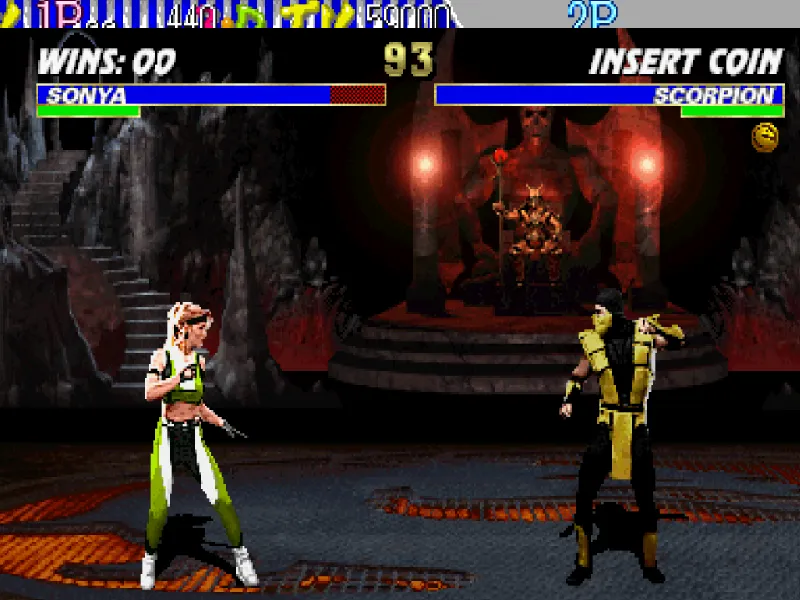
Ultimate Mortal Kombat 3 was released by Midway Games in 1995 for arcade hardware as an enhanced version of Mortal Kombat 3. It was a direct response to criticism that MK3 had received an update only six months after its release. UMK3 significantly expanded the roster from the 15 characters in MK3 to 23, reintroducing fan-favorite characters such as Scorpion, Classic Sub-Zero, Reptile, Jade, and Kitana.
More importantly, UMK3 introduced revolutionary system-level changes. The game added a Run button, an innovative design for fighting games at the time. Pressing Run allows the character to dash forward, which can be canceled into attacks or throws. This system completely changed the pace of Mortal Kombat—shifting it from slow, methodical "poke-and-block" gameplay to a high-speed fighting experience centered on dash-pressure and chain combos.
Another significant change was the introduction of new finishing moves: Animalities (transforming into an animal to kill the opponent, such as Scorpion turning into a giant scorpion), Brutalities (a long string of hits that shatters the opponent), and Babalities (turning the opponent into a baby). Each of these scenes was more gruesome than the last—and it was this increasingly graphic violence that directly led to the creation of the ESRB (Entertainment Software Rating Board) in the United States.
2. Character Roster
UMK3 features a 23-character roster, the largest in the Mortal Kombat series at the time.
2.1 Returning Classic Characters
| Character | Type | Features |
|---|---|---|
| Scorpion | Undead Ninja | The series' most popular character. Signature move: "Get over here!" (Spear Throw) to pull opponents in. Hellfire: erupts from beneath the opponent. |
| Classic Sub-Zero | Ice Ninja | The older version of Sub-Zero returns. Signature moves: Ice Freeze (freezes opponents in place) + Slide. Freeze into Uppercut is the classic combo. |
| Reptile | Reptilian Ninja | Green ninja. Features invisibility (complete camouflage) and Acid Spit. High mobility, low defense—a classic assassin-type character. |
| Kitana | Edenian Princess | Steel fans are her core weapon. Fan Throw for zoning; Fan Lift to launch opponents into combos. |
| Jade | Edenian Warrior | Kitana's best friend. Signature moves: Razor-Rang and full-screen invincibility dodge. |
2.2 New MK3 Characters
| Character | Type | Features |
|---|---|---|
| Kabal | Mutant Warrior | High-speed dash is the fastest way to close distance. Hooksword combos deal high damage. A former Black Dragon member, his face was destroyed by Shao Kahn's squads, forcing him to wear a respirator. |
| Nightwolf | Shaman Warrior | Native American shaman. Features Spirit Arrows and a Spirit Shield. One of the most well-received new designs in MK3. |
| Sindel | Edenian Queen | Kitana's mother, resurrected and brainwashed by Shao Kahn. Her signature "Banshee Scream" is a full-screen sonic attack that is extremely difficult to block. |
| Cyrax | Lin Kuei Cyborg | Yellow cyber-ninja. Features a Self-Destruct move to take the opponent down with him. |
| Sektor | Lin Kuei Cyborg | Red cyber-ninja. Features homing missiles fired from his chest to track down opponents. |
2.3 Hidden Characters and Bosses
| Character | Condition | Features |
|---|---|---|
| Motaro | Sub-Boss | Centaurian—human torso, horse body. His reflection ability bounces projectiles back at the player. Extremely strong in melee. |
| Shao Kahn | Final Boss | Emperor of Outworld. Shoulder charge is unblockable—must be jumped over. His taunt, "You Suck!", is one of the most insulting boss lines in fighting game history. |
| Human Smoke | Hidden Character | The original human form of Smoke before his cybernetic transformation—requires a specific input before selecting Smoke. |
3. Controls and Gameplay
3.1 Basic Controls
UMK3 uses a 5-button layout, adding a Run button to the traditional 4-button setup:
| Button | Function |
|---|---|
| HP (High Punch) | High punch—highest damage single normal attack. |
| LP (Low Punch) | Low punch—fast, used for starting combos. |
| HK (High Kick) | High kick—long range, used for zoning. |
| LK (Low Kick) | Low kick—fast, used for low-hitting mix-ups. |
| Run | Dash forward—can be canceled into attacks or throws. Run is the foundation of all offense in UMK3. |
3.2 Combo System
The core combat system of UMK3 is built on the formula: "Run → Start Combo → Special Move Finisher." Basics:
- Juggle Starter: Use specific attacks (usually an HP uppercut or a special move) to launch the opponent into the air—they cannot block while airborne.
- Juggle: Once the opponent is airborne, input attack strings to keep them in the air. Beginner combo: HP (Uppercut) → Run → HP → HP → HK → Special Move.
- Special Move Finisher: End the combo with a special move (like Scorpion's Spear or Sub-Zero's Freeze) for maximum damage.
3.3 Finishing Moves
UMK3 features five types of finishers. Each must be performed at the correct distance after the "Finish Him/Her!" prompt appears:
| Finisher Type | Effect |
|---|---|
| Fatality | Classic finisher: kill the opponent—each character has 2-3. |
| Animality | Transform into an animal to kill the opponent—e.g., Scorpion turns into a giant scorpion. |
| Babality | Turn the opponent into a baby—the most insulting finisher. |
| Brutality | A long string of hits that shatters the opponent into pieces. |
| Friendship | Don't kill the opponent—perform a friendly gesture (e.g., Scorpion shows a "Scorpion doll"). This humorous finisher was Midway's dark-humor response to censorship pressure. |
4. Arcade Mode Guide
4.1 Single-Player Progression
In Arcade Mode, players must win 15+ consecutive matches, including the sub-boss Motaro and the final boss Shao Kahn. There are no branching paths—the order is fixed.
| Stage | Opponent Type | Strategy |
|---|---|---|
| 1-3 | Random human characters—Low AI difficulty | Adapt to the Run mechanic's rhythm—Run → Uppercut → Combo is the universal starter. |
| 4-8 | Random characters—Medium AI difficulty | AI starts using more special moves and counters. Maintain Run pressure. |
| 9-11 | Random characters—High AI difficulty | AI will actively use Run to counter your pressure. Watch your defensive timing. |
| Sub-Boss | Motaro | Do not use projectiles—his reflection ability will bounce them back. Use melee pressure and punish his recovery frames. |
| 12-14 | Highest AI difficulty | The ultimate test. AI Run pressure is aggressive. Defense is the top priority. |
| Final Boss | Shao Kahn | Shoulder charge is unblockable—must jump to avoid. His taunt is a hint—he stands still for 0.5 seconds, creating an attack window. His health is massive—requires repeated "Attack → Jump over charge → Attack" cycles. |
5. Tips and Advanced Strategy
5.1 Basic Survival Tips
- Master the timing of the Run button: Run → HP (Uppercut) is the most basic and essential starter. Practice pressing HP the instant the Run animation stops—too early or too late will drop the combo.
- Scorpion is the best choice for beginners: His Spear ("Get over here!") pulls distant opponents into combo range. His Hellfire can pressure opponents as they wake up. His well-rounded kit lowers the barrier to entry.
- Sub-Zero's Freeze Combo: Classic combo—Freeze → Run → HP (Uppercut) → Combo → Slide finisher. Opponents take increased damage while frozen.
- Defense is the top priority: UMK3's AI at high difficulties uses extremely aggressive Run pressure. Learn to block and wait for gaps in the opponent's offense—defense is not retreating; it is preparation for a counter-attack.
- Memorize finisher distances and inputs: There is nothing more embarrassing than getting the opponent to their last sliver of health only to stand there waiting for the timer to run out because you forgot the input.
6. Trivia and Arcade Legends
6.1 ESRB—Mortal Kombat "Created" the Rating System
Between 1993 and 1994, the graphic violence of the Mortal Kombat series—especially the decapitations, heart-ripping, and dismemberment fatalities—triggered multiple congressional hearings on video game violence in the U.S. Senator Joe Lieberman called MK a "corruption of youth." The result was that the entire video game industry was forced to establish a self-censorship system—the origin of the ESRB (Entertainment Software Rating Board). Every white letter rating on your games—E, T, M—was born in the blood of Mortal Kombat.
6.2 The Origin of the "Ultimate" Tradition
Midway originally named this game "Mortal Kombat 3: Complete Edition," but changed it to "Ultimate" in the final stages. This naming convention started the "Ultimate" tradition for the series—but players who bought the original MK3 were not happy: they had spent $60 on the "complete" MK3 just six months prior, only for Midway to tell them, "That was actually a half-finished product; the real complete version is UMK3." This caused significant distrust toward Midway among arcade players at the time.
6.3 Babality—The Most Insulting Victory
Turning an opponent into a baby is the most insulting way to win in UMK3. Imagine this—after a bloody, life-or-death battle, you win, and your opponent turns into a crying baby, sitting on the ground and babbling at you. You have to stand there, looking at this baby, waiting for the timer to end. It is perhaps the most refined psychological warfare in fighting game history.
6.4 Scorpion's Spear Line
The famous "Get over here!" line came from the voice actor's improvisation. The original script called for "Come here!", but the actor felt it was too soft—he shouted "Get over here!" so loudly that the recording equipment nearly overloaded. Midway kept that take—and from then on, "Get over here!" became the iconic sound of Scorpion and the entire Mortal Kombat series.