I. Game Background
1.1 World Setting
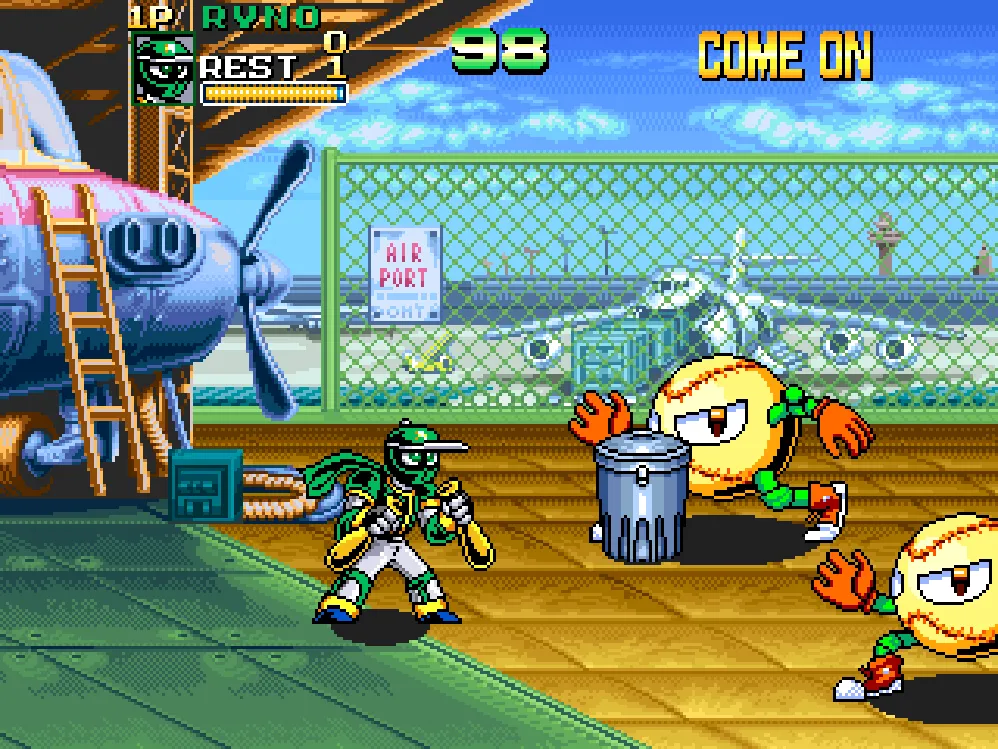
Ninja Baseball Bat Man blends "ninjas," "baseball," and "side-scrolling beat-'em-up" into a game that is as absurd as it is addictive. The story is set in a world obsessed with baseball. When evil forces raid the Baseball Hall of Fame and steal all the precious artifacts, the Commissioner of Baseball urgently assembles a special squad—four ninja warriors in baseball uniforms—to retrieve the stolen treasures.
Everything in this world is tied to baseball: enemies are robots wearing baseball caps, bosses are transformed automatic pitching machines, monsters wield baseball gloves, and the screen is filled with flying baseballs. The art style is full of exaggerated American cartoon flair—vibrant colors, hilarious character designs, and over-the-top animations. It stands in stark, intentional contrast to traditional Japanese ninja games like Ninja Gaiden or Shinobi. It isn't a serious ninja game; it’s an "absurd love letter" to American baseball and B-grade cartoons.
1.2 Development History
Ninja Baseball Bat Man was developed by the Japanese company Irem and released on arcade hardware in 1993. Known for hardcore shooters like R-Type and In the Hunt, this cartoon-style beat-'em-up was the most "unconventional" title in their history.
The game’s origin lies with an American named Drew Maniscalco. In 1991, while serving as National Sales Manager for Irem America, Drew was inspired by the box-office dominance of Teenage Mutant Ninja Turtles and Batman. He loved the mystique of the word "ninja," and as a baseball fan, he conceived the idea of protagonists wearing baseball uniforms and fighting with bats. He hired Gottlieb pinball artist Gordon Morison to draw character sketches and licensed the concept to Irem’s Japanese headquarters.
The turning point came mid-development. Drew’s original vision was a single-player platformer similar to Super Mario Bros. However, when the Irem Japan team saw the strong sales data for 4-player arcade games (like TMNT), they decisively pivoted the project into a 4-player side-scrolling beat-'em-up. This decision changed the game's destiny forever.
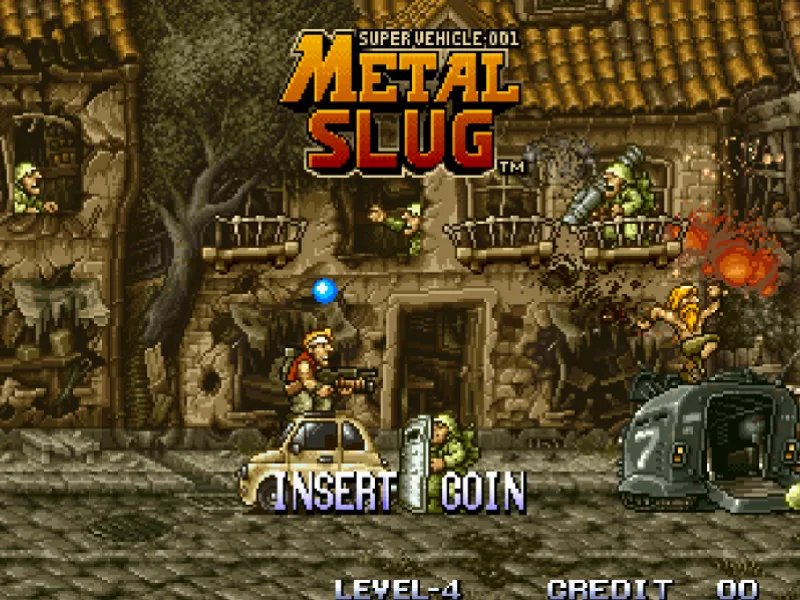
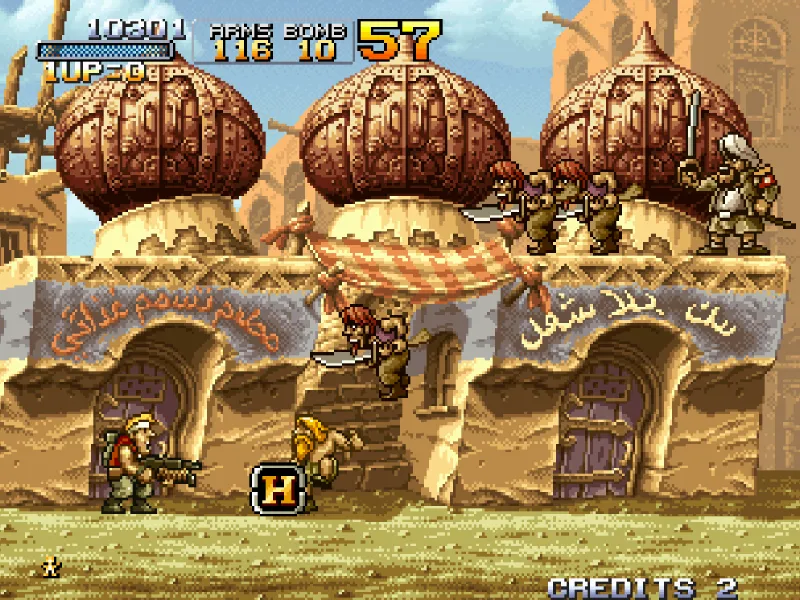
Irem Japan’s programming team was led by Shinichi Hamada, who later became famous for his work on the Metal Slug series. At Hamada’s insistence, the game retained Irem’s signature "hardcore depth." Despite its cartoonish exterior, the combo system, health-sacrifice mechanics, and distinct character designs reached a level of depth that few peers could match.
The game’s commercial fate was dramatic. In Japan, Ninja Baseball Bat Man received positive reviews and became a hit in 1993. But in North America—the market it was designed for—only 50 units were sold (out of a total production run of 1,042). Drew had left Irem for Data East USA before the game launched, leaving no one to champion its North American release. These dismal sales turned Ninja Baseball Bat Man into one of the "most buried masterpieces" of the 1990s arcade golden age.
However, the story didn't end there. Years later, with the rise of the MAME emulator, the ROM was rediscovered by players worldwide. Its deep mechanics, absurd aesthetic, and 4-player co-op fun ignited a delayed cult following. Today, it is recognized as a cult classic of the beat-'em-up genre—a hidden treasure that almost no one played back then, but everyone talks about now.
The four protagonists are direct tributes to early 1990s MLB stars: Captain Jose (José Canseco, Oakland Athletics), Twinbats Ryno (Ryne Sandberg, Chicago Cubs), Beanball Roger (Roger Clemens, Boston Red Sox), and Stick Straw (Darryl Strawberry, New York Mets). In the Japanese version, these names were changed to color-coded Japanese names.
II. Character Profiles
Each of the four baseball ninjas wears a different team uniform, uses unique weapons, and possesses distinct special moves and combat styles:
2.1 Captain Jose (Red) — The All-Rounder
| Attribute | Rating |
|---|---|
| Power | ★★★★ |
| Speed | ★★★ |
| Skill | ★★★ |
| Difficulty | ★ |
- Weapon: One-handed baseball bat—stable range, balanced damage.
- Special Move: Reverse jump attack during dash, direction-reversal attacks.
- Pros: Most balanced stats; can link ground combos after jump attacks (the only character with this ability); fluid and natural combos.
- Cons: Lacks explosive power—good at everything, but master of none.
- Verdict: Best for beginners. Balanced performance, natural combos, and high fault tolerance. If you're unsure who to pick—you can never go wrong with Jose.
2.2 Twinbats Ryno (Green) — The Speedster
| Attribute | Rating |
|---|---|
| Power | ★★★ |
| Speed | ★★★★★ |
| Skill | ★★★★ |
| Difficulty | ★★★ |
-
Weapon: Dual short bats—fastest attack speed in the game.
-
Special Move: Wall bounce (triggered near screen edges), aerial downward special attack.
-
Pros: Smallest hitbox, fastest speed, highest combo density; wall bounce provides unique mobility.
-
Cons: Lower single-hit damage; requires more combos to match output; lower health.
-
Verdict: A speed-based character for players who enjoy fast-paced combo play. The wall bounce allows for movement in tight spaces that other characters cannot achieve.
2.3 Beanball Roger (Yellow) — The Powerhouse
| Attribute | Rating |
|---|---|
| Power | ★★★★★ |
| Speed | ★★ |
| Skill | ★★★ |
| Difficulty | ★★ |
- Weapon: Heavy bat—largest size, highest attack power.
- Special Move: 360° spin attack (rotate joystick + attack), aerial downward smash.
- Pros: Highest single-hit damage, largest range; 360° spin is the only large-scale crowd-clearing move.
- Cons: Slowest movement speed, largest hitbox.
- Verdict: A classic power tank. The satisfaction of Roger’s heavy swings is unmatched. Perfect for players who like to charge head-on and clear the screen with brute force.
2.4 Stick Straw (Blue) — The Technician
| Attribute | Rating |
|---|---|
| Power | ★★★ |
| Speed | ★★★★ |
| Skill | ★★★★★ |
| Difficulty | ★★★★ |
- Weapon: Baseball glove + baseball—longest attack range.
- Special Move: 360° spin move (rotate joystick + jump), long-range baseball throw.
- Pros: Longest attack range; excellent throwing performance; versatile special moves.
- Cons: Attack speed is slower than Ryno, single-hit damage is lower than Roger—not the strongest in any single stat.
- Verdict: A technical character with the highest skill ceiling. His glove provides unique mid-range control, allowing him to output damage safely outside most enemies' reach. Ideal for players who prefer skill over brute force.
III. Controls
3.1 Basic Controls
Uses the standard Irem layout: 8-way joystick + 2 buttons:
| Action | Input | Description |
|---|---|---|
| Attack | Button 1 | Press repeatedly for combos |
| Jump | Button 2 | Standard jump |
| Run | →→ | Fast dash |
| Dash Attack | Dash + 1 | Swing while dashing |
| Jump Attack | 2 then 1 | Swing in mid-air |
| Grab | Auto-grab near enemy | Follow with → for throws |
| Forward Throw | Grab + → + 1/2 | Throw enemy forward |
| Back Throw | Grab + ← + 1/2 | Throw enemy backward |
| Ground Attack | 1 near downed enemy | Extra damage to downed foes |
| Recovery | Shake stick + press buttons | Aerial recovery to stand up quickly |
3.2 Special Move System
Ninja Baseball Bat Man features a combat system far deeper than its cartoon looks suggest. Core mechanics include:
Health-Sacrifice Special: Press 1+2 (Attack + Jump) to launch a screen-clearing attack. Core rule: It only consumes health if it hits an enemy—if you miss, no health is lost. This encourages "gambling" on screen clears after precise judgment. Consumes about 1/3 of your health bar.
Super Moves: Each character has a powerful Super Move—input a specific directional sequence after jumping + attack (e.g., 2, →, ←+1). These consume about 1/3 of your health but offer far greater damage and range than standard specials.
Red Health State: When health drops to the flashing red zone, you unlock extra attack moves and combo variations. This "near-death berserk" mechanic (pioneered by Irem in Undercover Cops) means the closer you are to death, the stronger you become. Experts intentionally stay in the red zone to maximize output.
Character Specials:
- Jose: Release 1 then press 2 for unique combo extensions; dash + back-jump attack.
- Ryno: Press jump near screen edges for a Wall Bounce.
- Roger: Rotate joystick + attack for 360° spin.
- Straw: Rotate joystick + jump for unique movement tech.
Grab Special: Press 1+2 while grabbing an enemy—consumes about 1/6 less health than a standard special. Except for Roger, all characters can follow up with a recovery move for combo extensions.
IV. Stages and Boss Guide
There are 7 stages across major US cities, with bonus stages between every two levels.
| Stage | Location | Features | Boss | Boss Name |
|---|---|---|---|---|
| 1 | — | Tutorial, basic grunts | Flying Machine | Windy Plane |
| 2 | San Francisco | Driveable cars, pumpkin bombs, mini-bikes | Hockey Player | Mad Lax |
| 3 | Las Vegas | Casino theme, card enemies, indestructible robots | Slot Machine | Deffending Slot |
| 4 | Houston | Horror theme, haunted furniture, flying pumpkins | Ghost Buffalo | Ghost Buffalo |
| 5 | Miami | Drill baseballs, electric baseballs, crab monsters | Mech Gator | Mechanical Alligator |
| 6 | Chicago | "Crime Dog" gunners + biting dogs | Assembled Villain | Makeshift Villain |
| 7 (Final) | New York | All-out brawl, Boss Rush + Final Battle | Final Boss | King Babe |
Strategy Tips
Stage 1 — Windy Plane: Introductory boss. After being knocked down, he performs an invincible rising uppercut—don't stand directly over him; wait for the move to finish before approaching.
Stage 2 — Mad Lax: Can be locked down with infinite standing attacks. Driveable cars appear here—use them to run over enemies for satisfying crowd control.
Stage 3 — Deffending Slot: Frequently falls down and enters an invincible state. The most dangerous attack is the coin barrage—keep your distance and move laterally to dodge.
Stage 4 — Ghost Buffalo: Has four phases, teleporting to new locations between each. Attack patterns change per phase—the final phase is the most aggressive. Be patient and don't get greedy.
Stage 5 — Mechanical Alligator: The high-speed ground dash is the most dangerous—high damage and subtle startup. Jump when he lowers his head.
Stage 6 — Makeshift Villain: If you deal too much damage in his first form, he enters a "berserk" mode in his final form. Control your output rhythm to manage the difficulty.
Stage 7 (Final) — King Babe: The final boss. The hitboxes are notoriously "unfair"—many attacks that look like they should hit don't, while his range is larger than it appears. In 4-player mode, he switches targets randomly. This is the stage where patience and sacrifice-move management are most critical.
Bonus Stages
| Bonus | Location | Gameplay |
|---|---|---|
| 1 | After Stage 2 | Mash buttons—crush baseballs with your hand |
| 2 | After Stage 5 | Mash buttons—hit baseballs with your fist for extra lives |
V. Advanced Tips
5.1 Survival Tips
- Specials aren't just "panic buttons"—they are "screen clears": The 1+2 special doesn't cost health if it misses. Learn to judge enemy density—clearing 5+ enemies at once is far more efficient than fighting them individually.
- Red Health management: Lower health = more moves = higher damage. Experts use this "all-out mode" to clear enemies quickly rather than playing defensively.
- Use grab invincibility: You are invincible while throwing an enemy. Use this to dodge other incoming attacks during group fights.
- Cars are god-tier: In San Francisco, don't leave the car. Its firepower is far superior to your bat.
- Learn boss invincibility windows: Don't waste specials when bosses are invincible (e.g., Windy Plane after knockdown, Deffending Slot while falling).
5.2 Co-op Tips
- Team Setup: Jose (Frontline) + Ryno (Flank/Speed) + Roger (Heavy Hitter) + Straw (Mid-range Control). This is the most balanced 4-player configuration.
- Staggered Specials: Don't use all screen-clears at once. Use them one after another to maintain invincibility frames and keep the screen clear.
- Rescue teammates: If a teammate is pinned, use a sacrifice move to clear the screen and protect them while they stand up.
5.3 Trivia
- DIP Switches: Original arcade boards allow difficulty and life settings via DIP switches. Default is 3 lives per credit on Normal difficulty.
- 4-Player Mode: Unlike some early arcade games, NBBM doesn't bind players to specific coin slots—anyone can join at any station.
- MAME's Legacy: Without MAME, this game might have been lost to history. We owe the preservation of this hidden gem to the emulator community.
VI. Legends and Lore
6.1 A Sales Manager's Wild Idea
Drew Maniscalco was a Sales Manager, not a designer. He saw TMNT and Batman dominating the box office and thought, "Ninja + Batman = Hit." The baseball theme was just his personal hobby. It’s rare in game history for an "outsider's hunch" to become a real, beloved game.
6.2 The 50-Unit Tragedy
1,042 units were produced, but only 50 were sold in North America. Drew left Irem before launch, leaving no one to push the game in the US. Ironically, the game designed for Americans became a hit in Japan.
6.3 The Metal Slug Connection
Lead programmer Shinichi Hamada later joined Nazca Corporation to create Metal Slug. The fluid animation and hardcore design philosophy seen in Ninja Baseball Bat Man were the precursors to the Metal Slug magic.
6.4 From Platformer to Beat-'em-up
Originally a single-player platformer, Irem Japan pivoted the project to a 4-player beat-'em-up based on market trends. Without this pivot, it would have been a forgotten platformer instead of a 4-player co-op legend.
6.5 "Japan's Vision of America"
The game is a unique cultural collision: a Japanese team trying to interpret American baseball culture, resulting in a "third culture" aesthetic that is neither fully Japanese nor fully American. This accidental charm is what makes it so special.
6.6 MAME's Rescue
In 1997, the MAME project dumped the ROM, allowing the world to finally play this "failed" 1993 product. It transformed from a commercial flop into a celebrated cult classic.