I. Introduction: The 'Slowest' Fighting Game in the Arcade
In 1993, if you walked into any arcade, you would hear two dominant sounds: the "Hadouken!" of Street Fighter II and the "Power Geyser!" of Fatal Fury. Every fighting game was chasing speed, fluidity, and longer combos—whoever could land the longest string of hits in the shortest time was the king of the arcade.
Then, Samurai Shodown arrived.
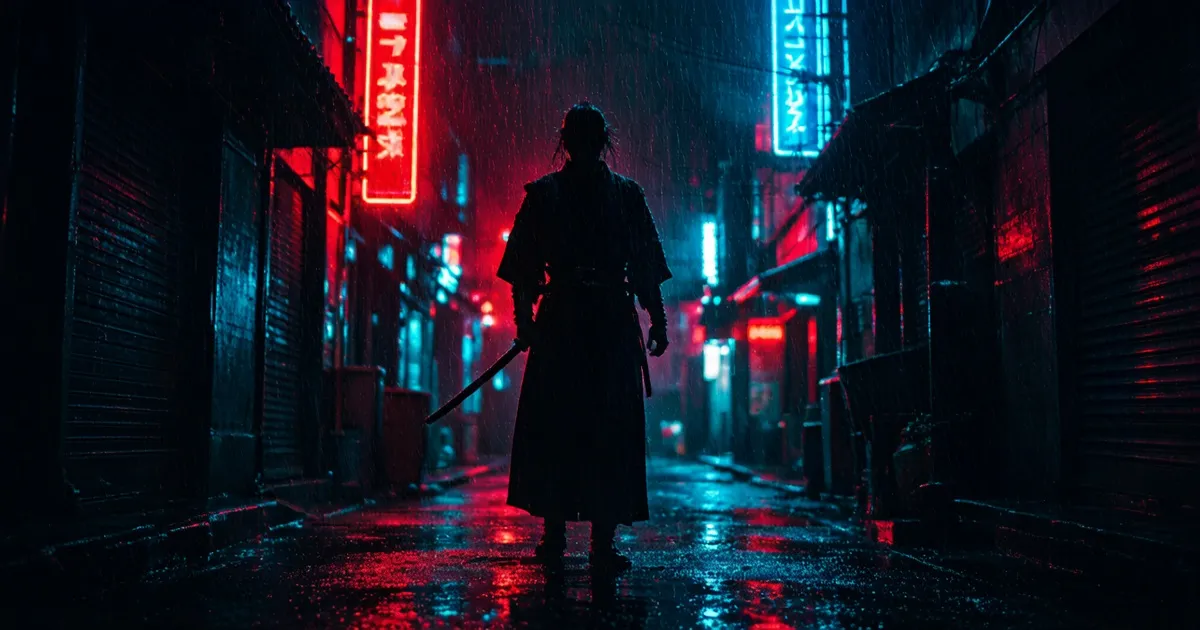
In this game, characters didn't fight with fists and feet; they fought with katanas. They didn't rush in to unleash flurries of blows—they paced slowly, staring each other down, as if waiting for something. Then—a single strike. Just one hit, and half your health bar was gone. Another strike, and it was over.
Back then, the reaction of many players seeing Samurai Shodown for the first time was: "What is this? They just stood there staring at each other for ages, and then it ended in one hit?"
But this "what is this"—this quiet, slow, and unapologetic fighting game in the midst of the most boisterous golden age of arcades—has survived for 30 years. It never became a global phenomenon like Street Fighter or The King of Fighters, but it never died either. It remains the eternal "outcast" samurai of the golden age of fighting games.
II. Origins: When SNK Decided to Make a Fighting Game Where You Could 'Die'
By 1993, SNK was already a major player in the fighting game market. The Fatal Fury series was hot, and Art of Fighting had just been released. But SNK wanted something completely different.
At the time, there was an unwritten rule in fighting games: Every hit only chips away a tiny bit of the opponent's health. A match was usually a war of attrition—you punch me, I kick you, and we see who whittles the other down first. This was the model established by Street Fighter, and everyone else was following that path.
SNK's designers posed a subversive question: What if a single strike could decide the outcome?
Not "what if you land a 20-hit combo"—but "what if it's just one strike?"
The answer to that question became the fundamental design philosophy of Samurai Shodown: One strike, one soul. In Samurai Shodown, a heavy slash (C button) can deal up to half of a health bar. This means that if you make a mistake—just once—your opponent can slash you down to near-death. And once your Rage Gauge is full, that single strike can even be a one-hit kill.
This design was crazy and risky at the time. It fundamentally rejected the "combo culture" of the 1990s—in Samurai Shodown, combos were never the core. The core was always that one strike—the one delivered at the right time, at the right distance, and in the right situation. One strike, and the match is over. No second strike needed.
Weapon-Based Combat—Another Lonely Path
Another fundamental decision in Samurai Shodown was: Use weapons instead of fists and feet.
This choice seems simple—isn't it just replacing fists with swords?—but it had a profound impact on the game's underlying logic. The attack range of a weapon is far greater than that of limbs, which meant the importance of "spacing" was magnified infinitely. In Street Fighter, Ryu and Ken's fireballs are for long-range zoning; in Samurai Shodown, Haohmaru's whirlwind slash is for zoning—but its hitbox is the length of a sword, much longer than a fireball. This meant close-quarters combat was no longer the only option—mid-range swordplay became the heart of the game.
And the fact that "weapons can be disarmed"—this is a unique mechanic of Samurai Shodown and one of the most humiliating designs in fighting game history. Once your weapon is knocked away, you are forced to fight a sword-wielding opponent with your bare hands. Your attack power is halved, and your reach is reduced to within a third of your opponent's blade. For that moment, you become someone "facing a swordsman unarmed"—and the fear and helplessness that creates is something no health bar value could ever convey.
III. A Gallery of Legends: Those 'Outcast' Samurai
If fighting game characters are a group of "athletes"—Street Fighter is MMA, KOF is a relay race—then the characters of Samurai Shodown are a group of "Edo-period swordsmen, ronin, monsters, and American ninjas." No one looks like a "standard fighter." Everyone has their own story, their own obsessions, and their own reasons for fighting—and these reasons often have nothing to do with "becoming the strongest."
Haohmaru—Not 'Wanting to be Strong,' but 'Wanting a Good Drink'
What are the typical motivations of a fighting game protagonist? "I want to be the strongest!" (Ryu), "I want revenge!" (Terry), "I want to protect the world!" (Kyo Kusanagi). And Haohmaru? His main goal is to find a worthy opponent to cross swords with—and then share a drink with them afterward. He isn't chasing "power"—he's chasing "a good drink after a good fight." This laid-back, alcoholic, half-baked samurai image is unique among all fighting game protagonists.
And the charm of this character lies precisely in his "lack of seriousness." Haohmaru isn't a hero—he's a drunken swordsman. His special move isn't called "Destruction Wave Slash," but "Secret Technique: Cyclone Slash"—a name that sounds as casual and cool as he is.
Ukyo Tachibana—The Consumptive Swordsman, Every Strike a Life-Force
Ukyo Tachibana is one of the most heartbreaking character designs in fighting game history. He is a swordsman of peerless talent—but he suffers from severe tuberculosis. Every swing of his sword is a further drain on his broken body. His pale face, the combat animations where he coughs up blood, and his eventual fall in the ending—all elevate Ukyo beyond the category of a "fighting game character" into a truly tragic literary figure.
In the ending of Samurai Shodown, Ukyo finds the "Ultimate Flower" he had been searching for—a legendary magical bloom said to cure any illness. He brings the flower back to the woman who has been caring for him—and then collapses in front of her, never to rise again. A fighting game ending that left countless players silent in front of their arcade screens.
Nakoruru—Not Here to Fight, But to Protect Nature
Nakoruru is an Ainu priestess whose only reason for entering the tournament is to protect nature from evil forces. Her "weapon" is a short blade—but her true power comes from her guardian hawk, Mamahaha. In battle, Mamahaha dives to attack opponents, while Nakoruru herself uses speed and agility to avoid direct confrontation.
In an era where all fighting games encouraged "hitting harder and longer combos"—Nakoruru's design language was "protection rather than aggression." She is the perfect embodiment of Samurai Shodown's "outcast" philosophy—not just an outcast in the fighting game market, but an outcast from the conventional "logic of the strong" within the genre itself.
Wan-Fu—A Chinese Warrior Using a Stone Pillar
Throughout fighting game history, characters have used all kinds of weapons—swords, knives, guns, axes, staves. But Wan-Fu's weapon is a massive stone pillar. Not a finely forged weapon—just a giant rock pillar he found on the ground. His attack animations aren't "swordsmanship"—they are lifting the pillar over his head and smashing it down. Anyone hit by it goes flying.
Wan-Fu is the character design philosophy that best represents the idea that "we aren't trying to be elegant—we are trying to be unique." His very existence is a humorous rebuttal to the "perfect warriors" found in other fighting games.
IV. Why Did Samurai Shodown Never Become a 'Mass-Market Game'?
So, why did a game with such excellent character design, such unique aesthetics, and such a respected combat system never become a global mass-market hit like Street Fighter or KOF? The core reason is precisely what Samurai Shodown is most proud of:
1. 'Slow'—Insisting on a slow pace in a fast-paced era
The pace of Street Fighter II is frantic—constant movement, constant attacks. The pace of Samurai Shodown is deliberate—two people standing still, staring at each other, as if waiting for something. Then—a strike. This "slowness" was a torture for arcade players accustomed to high-speed combo battles. But for those who could understand it—it was this "slowness" that gave every swing of the sword an incomparable weight.
2. 'One-Hit Kill'—Leaving no room for beginners to survive
In Street Fighter, a beginner can occasionally land a decent-looking combo by "button mashing" and feel pretty good about themselves. In Samurai Shodown—a beginner facing a veteran is dead in three hits. There is no psychological buffer of "at least I landed a few hits"—it's just being slashed to death in seconds. This experience is too cruel for newcomers—if you never have a chance to win, would you keep inserting coins?
3. 'No Combo Culture'—Walking alone in a world where combos are king
In the mid-to-late 1990s, the Street Fighter Alpha and KOF series pushed combo systems to increasingly complex extremes—hundreds of hits became the mark of a skilled player. Samurai Shodown stuck to its "one strike decides the outcome" philosophy. Its rejection of combos wasn't technical backwardness—it was a philosophical stand. But when the core audience of a genre has already accepted the framework that "long combos = technical depth"—the philosophy that "one strike is enough" is naturally seen as "not deep enough."
4. No Globalization—It was 'too Japanese'
Street Fighter's roster is global—an American soldier, a Brazilian green giant, an Indian yoga master, a Chinese female Interpol officer. An American player can find a "character they relate to." Samurai Shodown's roster is extremely Japanese—Edo-period samurai, ninjas, priestesses, Bakumatsu swordsmen. It doesn't try to "internationalize," it doesn't try to "make everyone find resonance"—it is simply a fighting game about Japanese swords, Japanese history, and Japanese aesthetics. This cultural uncompromising nature—is both its proudest trait and its natural market ceiling.
V. Legacy: Why is Samurai Shodown Still Alive After 30 Years?
In 2019, SNK released a reboot of Samurai Shodown—the first orthodox new entry in the series in 11 years since 2008's Samurai Shodown: Sen. It didn't use 3D models—it returned to 2.5D (3D rendering but pure 2D gameplay). It didn't add "100+ hit combos"—heavy slashes still take off half a health bar. Its designer said in an interview: "We aren't trying to make a game where 'beginners can win.' We are trying to make a game where 'every strike has meaning.'"
In an era where all fighting games are trying to simplify controls, lower the barrier to entry, and attract new players—Samurai Shodown (2019) chose not to compromise. It didn't become Street Fighter or KOF. It remained Samurai Shodown. And that decision—ensures that while it may never be the top-selling game on the market, it will always hold an irreplaceable place in history.
It's been 30 years. From the samurai quietly swinging his blade amidst the noise of Street Fighter II in 1993—to the lone wolf still insisting on "one strike, one soul" while caught between Street Fighter V and Tekken 7 in 2019. Samurai Shodown never became mainstream. And it never needed to. Because being an "outcast"—is not its flaw, it is its deepest pride.
🎮 Relive Samurai Shodown at Arcade Game Box
This site features the following classic arcade games from the Samurai Shodown series. Click to play directly in your browser:
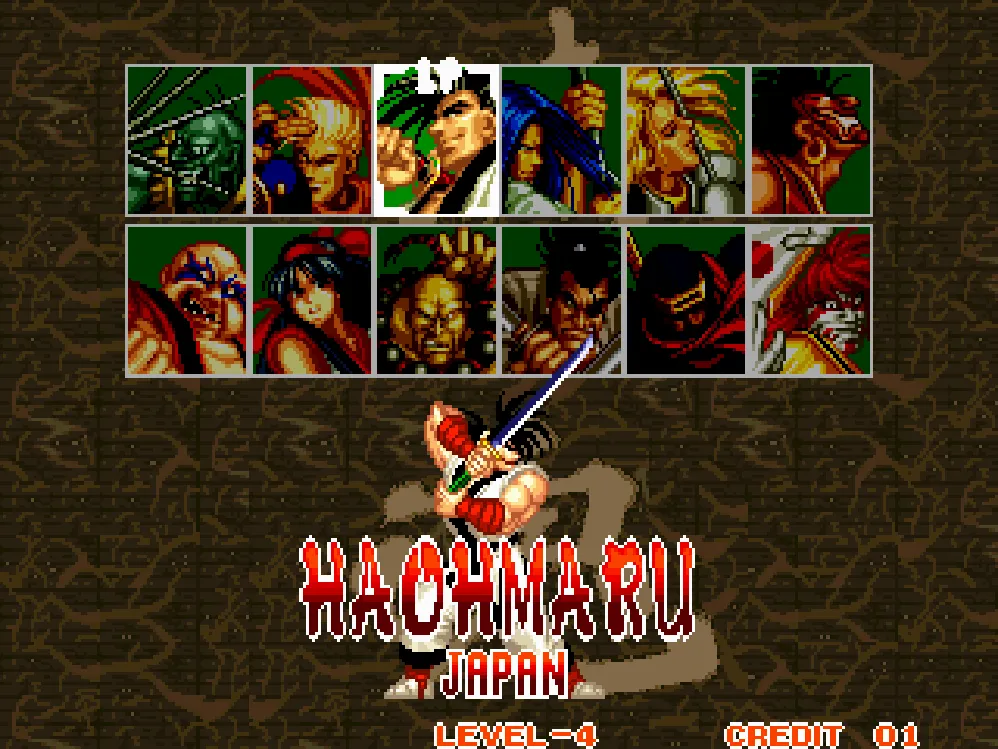
Samurai Shodown—The 1993 original, where it all began. Haohmaru, Ukyo Tachibana, Nakoruru, and other legendary swordsmen make their debut, and the one-hit-kill weapon-based combat is born.
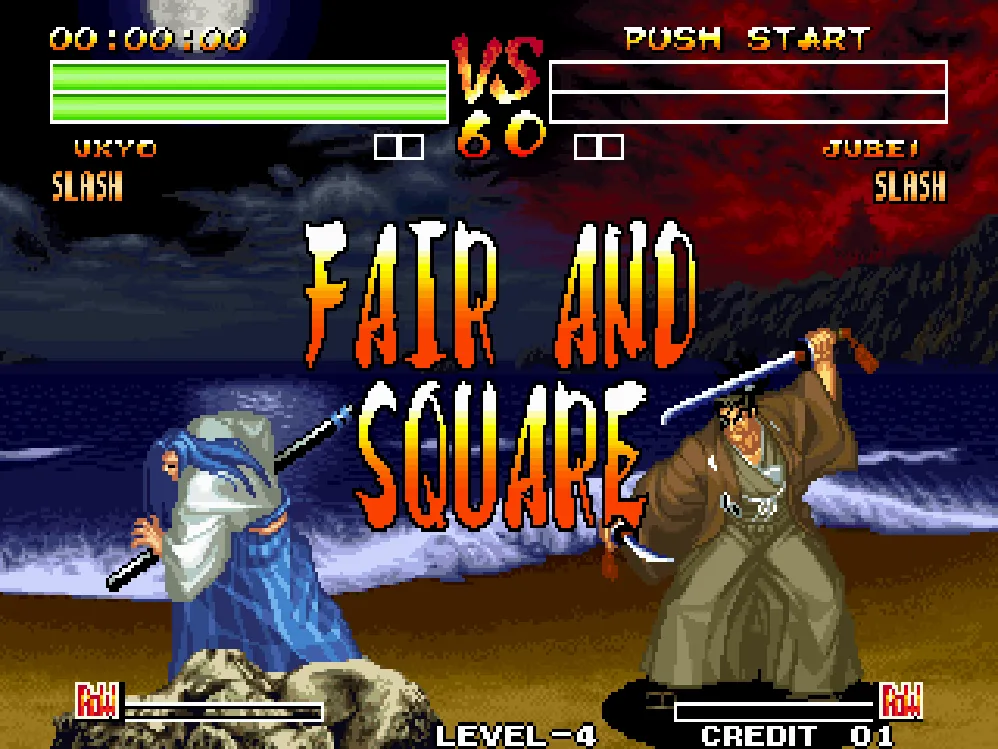
Samurai Shodown IV: Amakusa's Revenge—The 1996 title, serving as a bridge between Samurai Shodown III and II. The 14-hit CD combo system introduced combo elements to the series for the first time, and the water-and-fire symmetry of the Kazuki and Sogetsu brothers remains a pinnacle of SNK character art.
🎮 Play "Samurai Shodown IV: Amakusa's Revenge" in your browser →
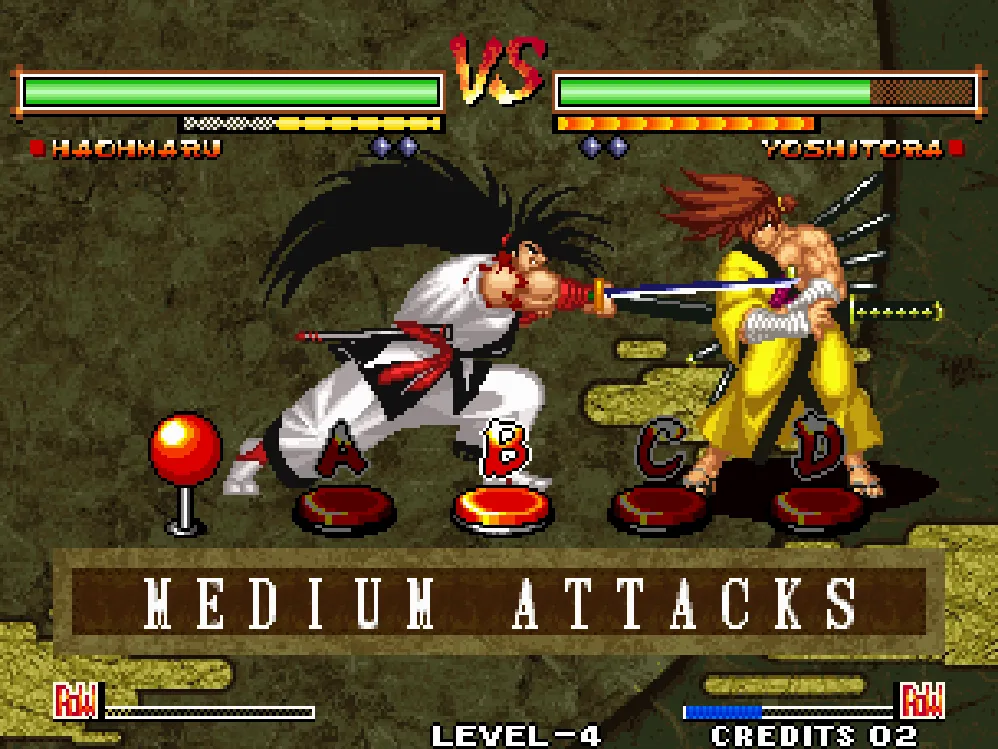
Samurai Shodown V Special—The 2004 title, the final orthodox Samurai Shodown game on the Neo Geo hardware. A massive gathering of characters from across the series with polished systems, widely considered by the hardcore community to be the "ultimate competitive version" of the Samurai Shodown series.