I. Game Background
1.1 World Setting
In 1788, Japan was supposedly in a "Golden Age of Peace" under the rule of the 11th Shogun, Tokugawa Ienari. Yet, beneath this veneer of tranquility, a dark force was stirring. One hundred and fifty years prior, in 1638, the Shimabara Rebellion—the largest peasant uprising in Japanese history—had been crushed. The rebellion's spiritual leader, a sixteen-year-old boy named Amakusa Shiro Tokisada, was executed by the Shogunate's forces. History should have ended there, but in the world of Samurai Shodown, this was merely the beginning.
Amakusa's soul found no rest. Consumed by despair and hatred, he struck a pact with the dark god "Ambrosia" and returned to the mortal realm as a demon. In 1787, after a century and a half of slumber, Amakusa awoke, transformed into a powerful sorcerer. He unleashed a dark miasma across Japan, bringing chaos and monsters in his wake. His goal was simple and absolute: to avenge the followers who perished at Shimabara and shroud the land that betrayed him in darkness.
This spreading darkness alerted warriors across the Japanese archipelago. From wandering swordsmen seeking the pinnacle of martial arts to an Ainu maiden protecting nature, a terminally ill swordsman searching for a cure, and even warriors from distant lands—France, China, and America—all were drawn into this fated confrontation against the dark forces.
Samurai Shodown is defined by a unique, gothic, and dark atmosphere. Unlike the bright, arena-style fighting games of its time, the stages of Samurai Shodown are shrouded in twilight, moonlight, and blood. The background music makes extensive use of traditional instruments like the shakuhachi and taiko drums, creating a desolate and lethal mood. In this world, a single clash of blades can decide life or death, and a heavy strike can deplete half a health bar. This is not just a game mechanic; it is the ultimate interpretation of a "samurai duel": every move must be calculated, for life and death hang in the balance.
1.2 Development History
In 1993, SNK was in the golden age of its arcade empire. With the success of Fatal Fury (1991) and Art of Fighting (1992), SNK had already established its presence in the fighting game genre. However, facing the overwhelming dominance of Capcom's Street Fighter II, SNK developers knew that simply making "another brawler" was not the answer. It was against this backdrop that an internal development team decided to change direction entirely.
Initially, the game was not conceived as a fighting game, but as a side-scrolling action game featuring monsters. Director Yasushi Adachi revealed in a later interview that the original prototype was more like Streets of Rage than Street Fighter. However, when Adachi began to consider "what would truly sell in the global market," he made a key decision: to pivot the game into a weapon-based fighting game featuring samurai and ninjas. He believed these unique Japanese cultural icons would have greater international appeal than generic monsters. The only survivor from the original monster concept was Gen-an, the claw-wielding demon.
This decision birthed the first fighting game in history centered on cold-weapon combat. In many ways, the design philosophy of Samurai Shodown was a deliberate rebellion against Street Fighter II. First, it abandoned the combo system in favor of devastating single-hit power—a well-placed heavy slash could instantly take away over half of an opponent's health. Adachi admitted that this design was met with unanimous opposition from management, but he "ignored their opinions and insisted on keeping it." He explained that the team wanted to convey the "fear of weapon combat"—when facing a blade, every attack is dangerous, and every defense requires courage.
Another technical breakthrough was the camera zoom system. While SNK first experimented with zoom effects in Art of Fighting, Samurai Shodown perfected it, making it a core component of the game's pacing. When characters are far apart, the camera pulls back to show the full battlefield; when they close in, it zooms in to create a sense of tension. This dynamic camera was an ambitious technical feat for the high-capacity Neo Geo MVS hardware, boasting a massive 118-megabit count—one of the largest for early Neo Geo titles. In the arcades of 1993, the visuals of Samurai Shodown—from falling cherry blossoms to splashing blood, and from giant character close-ups to slow-motion heavy hits—were overwhelming.
Samurai Shodown was released in Japan on July 7, 1993, and immediately sparked a global craze. According to Game Machine magazine, it topped the Japanese arcade popularity charts in its release month. At the 1993 Gamest Awards, Samurai Shodown swept multiple categories, including Best Game, Best Fighting Game, Best Director, Best Music, and Best Character (Nakoruru). Electronic Gaming Monthly also named it Game of the Year. Overnight, SNK created a new fighting game paradigm that stood shoulder-to-shoulder with Street Fighter II—just two years after the latter's dominance. More importantly, Samurai Shodown pioneered the "weapon-based fighting" subgenre, paving the way for titles like Soul Calibur, cementing its status as a milestone in fighting game history.
II. Character Introduction
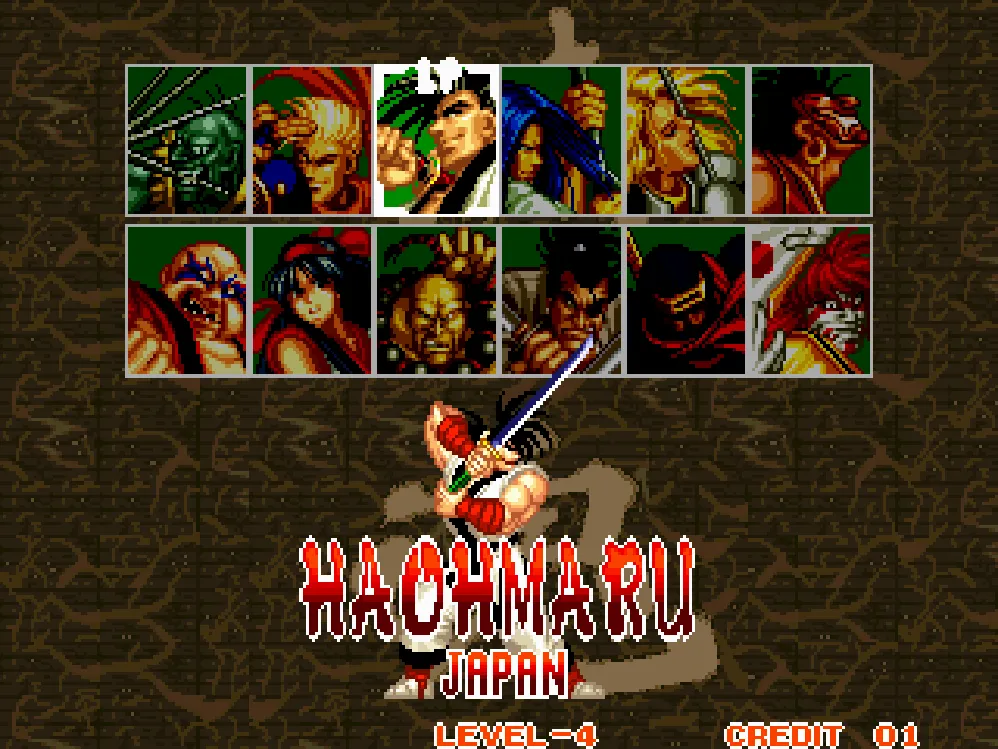
The original Samurai Shodown features 12 playable characters and the final boss, Amakusa Shiro Tokisada. The following table covers weapon types, fighting styles, personality traits, and strength ratings:
| Character | Nationality/Background | Weapon | Fighting Style | Personality | Strength Rating |
|---|---|---|---|---|---|
| Haohmaru | Japan/Wandering Swordsman | Katana (Fugudoku) | Balanced, projectile zoning | Wild, loves sake | S-Tier (Top) |
| Nakoruru | Japan/Ainu | Dagger (Chichi-kiri) | High mobility, hawk assist | Pure, nature guardian | A-Tier (Strong) |
| Ukyo | Japan/Iai Swordsman | Katana (Nameless) | Iaijutsu, apple-teleport | Melancholic, ill | S-Tier (Top) |
| Hanzo | Japan/Iga Ninja | Ninja Sword | Versatile ninjutsu, Izuna Drop | Calm, devoted father | A-Tier (Strong) |
| Galford | USA/Ninja | Ninja Sword | Electric ninjutsu, dog assist | Hot-blooded, American ninja | B-Tier (Solid) |
| Kyoshiro | Japan/Kabuki | Naginata | Range control, spinning moves | Dramatic, artistic | B-Tier (Solid) |
| Gen-an | Japan/Demon | Iron Claws | Close-range biting, lunges | Evil, cruel | C-Tier (Weak) |
| Charlotte | France/Noble | Rapier (Raphael) | Fencing, thrusting pressure | Noble, patriotic | A-Tier (Strong) |
| Tam Tam | South America/Maya | Machete (Palenque) | Heavy reach, boomerang slash | Honorable, village guardian | C-Tier (Weak) |
| Jubei | Japan/Shogunate | Dual Katanas | Dual-wielding, multi-slashes | Loyal, Shogun's blade | B-Tier (Solid) |
| Wan-Fu | China/Qing General | Dao (Green Dragon) | Powerhouse, heavy charges | Fierce, seeks strength | C-Tier (Weak) |
| Earthquake | USA/Thief Ninja | Kusarigama | Giant body, physical pressure | Greedy, treasure hunter | C-Tier (Weak) |
| Amakusa | Japan/Demon | Magic Orb | Full-screen magic, teleport | Vengeful, evil | Boss Only |
Haohmaru is the iconic protagonist of the Samurai Shodown series, heavily influenced by the legendary swordsman Miyamoto Musashi. A wanderer seeking the title of "strongest," he travels Japan with his katana, "Fugudoku," looking for worthy opponents. As a balanced character, Haohmaru excels at all ranges: his signature "Whirlwind Slash" provides mid-to-long-range zoning, while his heavy slashes offer massive hitboxes and damage up close. He is considered top-tier in the original game due to his high single-hit damage and excellent rhythm. In his ending, Mai Shiranui from Fatal Fury makes a cameo appearance, an early SNK crossover easter egg.
Nakoruru is the most culturally influential character in the series. A shrine maiden from the Ainu people of Hokkaido, she fights alongside her hawk, Mamahaha. Her style is light and agile, boasting the fastest movement in the game. She can summon Mamahaha for diving attacks or glide across the battlefield. While her single-hit damage is lower, her superior mobility—fast harassment and gliding escapes—makes her a top-tier defensive fighter. Nakoruru is one of the earliest representations of Ainu culture in video games, blending traditional clothing, patterns, and nature worship. Her popularity was such that she beat all male characters to win Best Character at the 1993 Gamest Awards.
Ukyo is one of the most popular male characters. Modeled after Musashi's rival, Sasaki Kojiro, he specializes in Iaijutsu (the art of drawing the sword). His backstory is tragic: suffering from tuberculosis, his only wish is to find the legendary "Ultimate Flower" for his beloved, Odagiri Kei, before he dies. In-game, he uses apples to mark his teleporting slashes and possesses the fastest mid-range startup in the game. He requires precise timing—waiting for the opponent to show an opening for a one-hit kill. He is a staple S-tier character in competitive play.
Hanzo is based on the famous Iga ninja leader. In the game, his son Shinzo is controlled by Amakusa's dark power, and Hanzo tracks Amakusa to save him. His moveset is diverse, featuring fire ninjutsu and his signature "Izuna Drop"—a grab that slams the opponent into the ground. Interestingly, Galford's animations were reused from Hanzo's assets, a common optimization tactic at the time.
Amakusa Shiro Tokisada is the final boss and one of the most iconic villains. Dressed in eerie, ornate European-style robes, he uses a magic orb to unleash full-screen attacks—the only character without a physical melee weapon. His design blends historical fact (the Shimabara Rebellion leader) with gothic fantasy. His moves include teleportation, full-screen projectiles, tracking lightning, and a notorious multi-hit slap combo. In the arcade, he is one of the most frustrating bosses in history—his frame-perfect reactions, massive damage, and projectile spam have "donated" countless coins to arcade machines.
III. Controls and Gameplay
3.1 Basic Controls
Samurai Shodown uses the standard Neo Geo MVS four-button layout, but with a unique distribution:
| Button | Function | Damage | Speed | Usage |
|---|---|---|---|---|
| A (Weak) | Light Slash | Low | Very Fast | Zoning, interrupting, combo starter |
| B (Medium) | Medium Slash | Medium | Fast | Pressure, core combo link |
| C (Heavy) | Heavy Slash | Very High | Slow | Core damage, triggers slow-mo/blood effects |
| D (Kick) | Kick | Low-Med | Fast | Low-profile, harassment |
| A+B | Strong Slash | High | Med | Harder-hitting than normal heavy slash |
| C+D | Strong Kick | Medium | Med | Wide range, good for clearing space |
| Forward x2 | Dash | - | - | Fast approach |
| Back x2 | Backstep | - | - | Quick retreat |
The core controversy is the C button's damage. A single heavy slash can take 40-50% of health. This "half-life in one hit" design was seen as radical, but it gives the game its unique tension: every swing matters, and every defense is a matter of life and death.
3.2 Unique Systems
POW Gauge: The gauge at the bottom is revolutionary. As you take damage or land hits, it fills. As it fills, your character turns red—a visual signal that the fight is heating up. At MAX, attack power increases significantly. Unlike other games, there are no "Super Moves"; the MAX state itself makes your normal attacks lethal.
Weapon Clash and Disarm: When two slashes collide, a "Weapon Lock" occurs. Players must mash buttons to overpower the opponent. The winner disarms the loser, forcing them to fight unarmed until they retrieve their weapon. Unarmed characters can perform a "bare-handed catch" to counter slashes, adding immense depth to the game's theme.
Camera Zoom: Inherited from Art of Fighting, the camera zooms in and out dynamically based on distance, creating a cinematic feel that was a technical marvel for 1993.
Referee and Bystander: "Kuroko" (the referee) signals hits with flags, adding a traditional Japanese tournament feel. "Hikyaku" (the delivery man) occasionally throws items—chicken for health or bombs—adding unpredictable variables to the match.
IV. Single-Player and Boss Strategy
Samurai Shodown features a 12-stage arcade mode followed by the final boss, Amakusa. The order is randomized, increasing replayability.
Amakusa Boss Strategy: Amakusa is notorious for "reading inputs." He reacts instantly to your moves.
- Dark Force Ball: Jump over or interrupt during startup.
- Lightning Strike: Keep moving; it's unblockable.
- Teleport: Dash or jump away immediately after he vanishes.
- Slap Rush: Never try to out-trade him up close.
- Crystal Barrier: Stop attacking until it fades.
Core Strategy: Patience is key. Do not initiate. Wait for his recovery frames after he uses projectiles, land a heavy hit, and retreat. Never commit to long combos; he will teleport away.
V. Advanced Tips
- Distance is Everything: Master your character's "sweet spot." Haohmaru likes mid-range, Ukyo likes close-range, Nakoruru likes mobility.
- Don't Whiff Heavy Slashes: The recovery is massive. Only use them when you are certain they will land.
- Manage the POW Gauge: Don't just play defensively. Aggression builds the gauge faster.
- Weapon Clash: Stay calm. Mashing rhythmically is more effective than frantic speed.
- Air Control: Use jumps and glides to control the pace, not just to attack.
VI. Trivia and Legends
- Anti-Capcom Strategy: SNK chose weapon combat to differentiate from Street Fighter II. It was a brilliant move that created a new subgenre.
- Nakoruru & Ainu Culture: She is one of the first respectful representations of Ainu culture in gaming, blending history with fantasy.
- 118 Megabits: The massive ROM size was dedicated to the smooth camera zoom and high-quality character sprites.
- Neo Geo CD Loading: A legendary meme. The loading times were so long that players joked they learned patience while waiting for the match to start.